
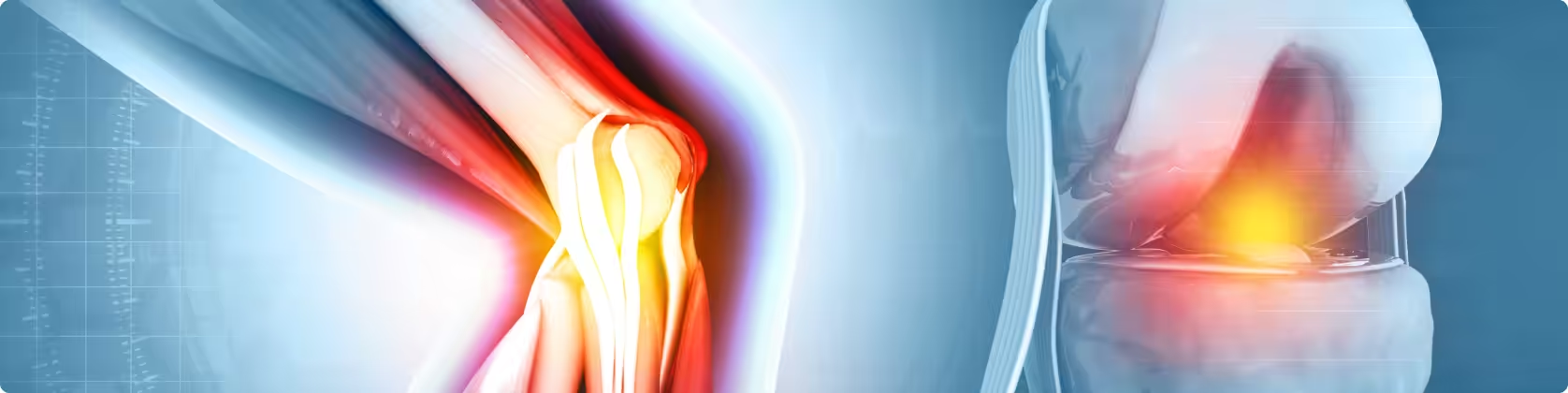
The medial Unicompartmental Knee Arthroplasty (UKA) is the most commonly performed, as most of the forces exerted on the knee pass through the medial compartment, resulting in greater wear. The lateral Unicompartmental Knee Arthroplasty (UKA) is performed less frequently, since the lateral compartment is less commonly affected. Recovery is faster and less painful compared to a total knee arthroplasty; however, revision rates are slightly higher than with total replacements, as arthritis may progress to other parts of the knee.
The movement of the knee is more natural since both the anterior and posterior cruciate ligaments are preserved. Other advantages include less muscle damage, smaller surgical incisions, reduced bone removal, minimal postoperative pain, less blood loss, shorter hospital stay, faster recovery, and overall better suitability for younger and more active patients compared to total knee arthroplasty.
Preoperative correction of varus or valgus deformity must be possible, and the knee must have at least 100 degrees of flexion. It is not indicated for inflammatory arthritis, such as rheumatoid or psoriatic arthritis. The extension deficit of the knee must be less than 10 degrees. Contraindications also include patients with significantly elevated body weight, over 120 kg.
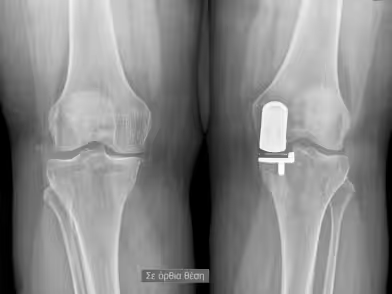
As with all surgical procedures, Unicompartmental Knee Arthroplasty (UKA) carries potential complications. The orthopedic surgeon must inform the patient of all possible risks and take preventive measures to avoid them. The most common complications include thrombosis (prevented with anticoagulants), infection (prevented with antibiotics), nerve or vascular injury, and persistent knee pain despite surgery. These complications, however, are very rare.

Stop living in pain, improve the quality of your life!
In Unicompartmental Knee Arthroplasty (UKA), hospital stay is shorter, postoperative pain is milder, and weight-bearing begins immediately after surgery. Crutches or antibacterial medication may be required for the first days or weeks until the patient can walk unaided. Patients are instructed in specific exercises to maintain range of motion and restore muscle strength, either independently or with the assistance of a physiotherapist. In most cases, patients return to their preoperative activities within four weeks after surgery.
Unicompartmental Knee Arthroplasty (UKA) is considered a technically demanding surgical procedure. Therefore, choosing an orthopedic surgeon with extensive experience and specialized training, as well as careful patient selection, ensures an excellent outcome comparable to that of total knee arthroplasty.
to guide you about your condition, so you can choose the best possible treatment for it.
We use cookies to improve your experience on our site. By using our site, you consent to cookies.
Manage your cookie preferences below:
Essential cookies enable basic functions and are necessary for the proper function of the website.
These cookies are needed for adding comments on this website.
Google reCAPTCHA helps protect websites from spam and abuse by verifying user interactions through challenges.
Google Tag Manager simplifies the management of marketing tags on your website without code changes.
Marketing cookies are used to follow visitors to websites. The intention is to show ads that are relevant and engaging to the individual user.
Google Maps is a web mapping service providing satellite imagery, real-time navigation, and location-based information.
Service URL: policies.google.com (opens in a new window)