

Review of Total Hip Arthroplasty: Now And With ASI Minimally Invasive Technique
Although total hip replacement is one of the most successful surgical procedures in orthopaedics, a significant number of patients undergo revision (second operation/reoperation) either due to mechanical problems (loosening or wear of the prosthesis, poor positioning), microbial infection or fracture around the prosthesis.
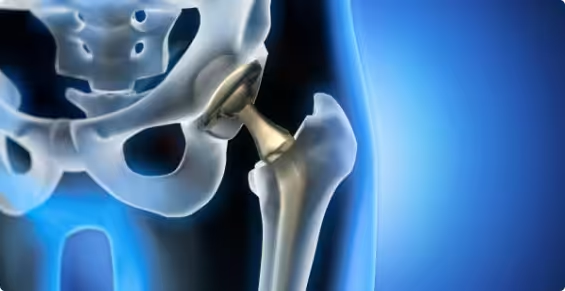
The main symptom of patients with a problematic total hip replacement is pain in the groin and/or thigh, so when this occurs it is necessary to visit the orthopaedic surgeon in time. Prompt investigation and treatment of a loose total hip replacement is of particular importance, as it usually leads to avoiding worsening of bone deterioration around the prosthesis, which makes revision easier.
The correct placement of materials during the initial surgery, in order for the patient to have a perfect surgical result, requires considerable surgical experience.
Regular postoperative monitoring is of particular importance for the prevention and early treatment of problems
Traditionally, revision hip surgery requires extensive access (large incisions, large soft tissue injuries, large blood loss) and is associated with a higher complication rate than the first operation. In cases where only one part of the prosthesis is problematic, individual replacement is preferred, making the revision less time-consuming, with less need for blood and faster recovery.
The minimally invasive ASI (Anterior Supine Intermuscular) technique, apart from its great success in initial total hip arthroplasty procedures, is used with excellent results also in cases where it is necessary to revise only the cotyloid prosthesis, ensuring the maximum benefits of partial replacement of the old prosthesis.
ASI virtually eliminates the need for transfusion, dramatically reduces recovery time and avoids the complications that accompany the long recovery period after extensive hip resurfacing. The advantages of the method are due to the minimal injury to the soft tissues around the artificial joint (which are already injured from the previous operation), the good visibility that the surgeon has during the operation and the immediate estimation of the length of both lower limbs.
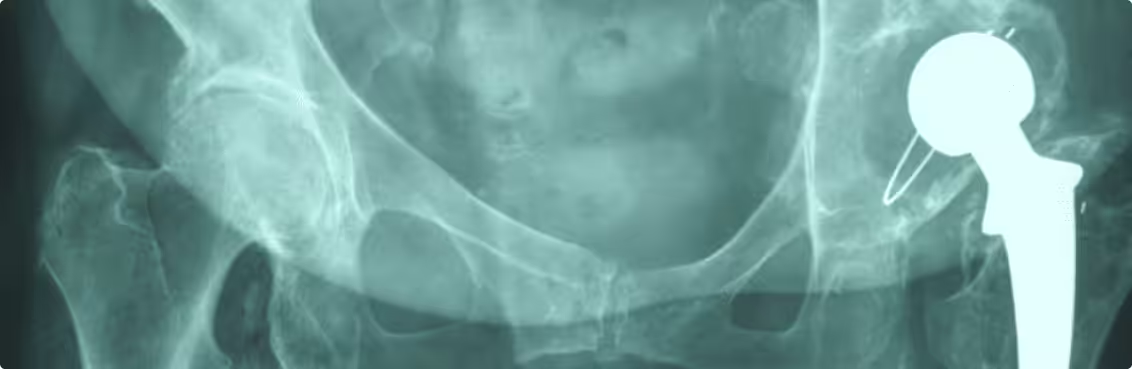
In the Large Joints Clinic of the Athens Medical Center, under the direction of Mr. Ioannis Tsarouchas, a large number of revisions have been carried out with the ASI method combined, where appropriate, with the reliable techniques of cotyloplasty and the introduction of grafts in areas of bone deficiencies (impaction grafting, strut grafts, etc.). In particular, cotyloplasty is a proven method for the treatment of cases of incomplete cotyloidy and large bone deficiencies. The selection of patients who can undergo revision surgery with ASI is made after a detailed preoperative examination to exclude the possibility that there is a large amount of wear and tear in the femoral prosthesis or that the bone deficits of the cotyloid are so large that more extensive access is required.
With the review of the problematic total hip arthroplasty patients ensure many years of smooth functioning of their prosthesis and maintain their quality of life at a high level.


 Prev.
Prev.