
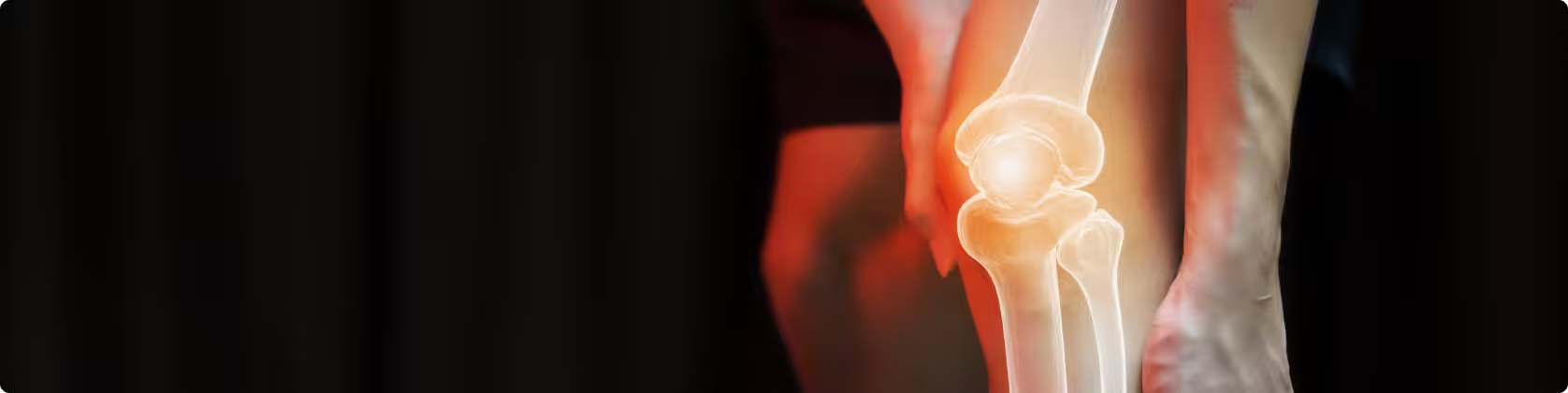
A torn anterior cruciate ligament (ACL) is a serious knee injury that often occurs during sports activities. The ACL is a key stabilizer of the knee and plays a crucial role in maintaining joint stability during movement.
After a torn ACL, patients usually present with characteristic symptoms, which may include:
In the following days, symptoms may improve as swelling and pain decrease. However, knee instability often persists, and patients may continue to experience functional limitations. Treatment typically involves physiotherapy and, in many cases, surgery to restore stability.
Diagnosis involves both clinical tests and imaging studies. Magnetic resonance imaging (MRI) can reveal ligament, tendon, and cartilage injuries, as well as bone edema that supports the diagnosis. However, clinical examination is essential and includes tests such as Lachman test, Pivot shift test, and Anterior drawer test. These assess the mobility of the tibia relative to the femur. Combining the findings from these tests with the patient’s symptoms leads to an accurate diagnosis.

Stop living in pain, improve the quality of your life!
Treatment is individualized, taking into account medical history, age, activity level, and other factors. Options include non-surgical conservative management or surgical reconstruction, depending on the degree of instability and severity of the injury.
Unlike other ligaments, a torn ACL does not heal on its own. In rare cases of partial tears, conservative management may be considered.
Conservative treatment focuses on restoring knee function without surgery. While the ACL itself cannot regenerate, physiotherapy and strengthening surrounding muscles and structures can help stabilize the joint.
A typical physiotherapy program includes strengthening the muscles around the knee—particularly the hamstrings—which can partially compensate for the torn ACL. Proprioceptive training also helps improve neuromuscular control and joint stability.
The choice between conservative treatment and surgery depends on age, activity level, severity (partial vs. complete tear), and patient preference. The final decision should be made in consultation with the orthopedic surgeon.
Surgical reconstruction aims to restore knee stability and is particularly necessary in active individuals who require full joint function. Without reconstruction, the menisci and cartilage are subjected to greater stress, increasing the risk of meniscal injuries, cartilage damage, and joint degeneration.
ACL reconstruction typically requires only a one-day hospital stay, with patients discharged the day after surgery. The procedure is performed under general or spinal anesthesia.
ACL reconstruction is performed exclusively with autografts, harvested from the patient. These grafts are free of immune reactions and integrate better and faster into the knee. The most commonly used grafts are hamstring tendons, patellar tendon graft with bone plugs from the patella and tibia. Alternatively, quadriceps tendon graft is preferred in selected cases. The procedure is performed arthroscopically through small incisions.
Most surgeons prefer using hamstring tendon grafts or the patellar tendon graft. The choice is individualized based on the patient’s age, physical condition, and activity level.
The use of a functional brace after ACL reconstruction has not been proven to provide significant benefits during rehabilitation. However, some surgeons may recommend it for young patients or those at higher risk of reinjury.
With proper physiotherapy and a structured rehabilitation program, most patients can return to full sports activity within 4 to 9 months after surgery.
A torn anterior cruciate ligament (ACL) is a serious knee injury that often occurs during sports activities. The ACL is a key stabilizer of the knee and plays a crucial role in maintaining joint stability during movement.
After a torn ACL, patients usually present with characteristic symptoms, which may include:
In the following days, symptoms may improve as swelling and pain decrease. However, knee instability often persists, and patients may continue to experience functional limitations. Treatment typically involves physiotherapy and, in many cases, surgery to restore stability.
Diagnosis involves both clinical tests and imaging studies. Magnetic resonance imaging (MRI) can reveal ligament, tendon, and cartilage injuries, as well as bone edema that supports the diagnosis. However, clinical examination is essential and includes tests such as Lachman test, Pivot shift test, and Anterior drawer test. These assess the mobility of the tibia relative to the femur. Combining the findings from these tests with the patient’s symptoms leads to an accurate diagnosis.
Treatment is individualized, taking into account medical history, age, activity level, and other factors. Options include non-surgical conservative management or surgical reconstruction, depending on the degree of instability and severity of the injury.
Unlike other ligaments, a torn ACL does not heal on its own. In rare cases of partial tears, conservative management may be considered.
Conservative treatment focuses on restoring knee function without surgery. While the ACL itself cannot regenerate, physiotherapy and strengthening surrounding muscles and structures can help stabilize the joint.
A typical physiotherapy program includes strengthening the muscles around the knee—particularly the hamstrings—which can partially compensate for the torn ACL. Proprioceptive training also helps improve neuromuscular control and joint stability.
The choice between conservative treatment and surgery depends on age, activity level, severity (partial vs. complete tear), and patient preference. The final decision should be made in consultation with the orthopedic surgeon.
Surgical reconstruction aims to restore knee stability and is particularly necessary in active individuals who require full joint function. Without reconstruction, the menisci and cartilage are subjected to greater stress, increasing the risk of meniscal injuries, cartilage damage, and joint degeneration.
ACL reconstruction typically requires only a one-day hospital stay, with patients discharged the day after surgery. The procedure is performed under general or spinal anesthesia.
ACL reconstruction is performed exclusively with autografts, harvested from the patient. These grafts are free of immune reactions and integrate better and faster into the knee. The most commonly used grafts are hamstring tendons, patellar tendon graft with bone plugs from the patella and tibia. Alternatively, quadriceps tendon graft is preferred in selected cases. The procedure is performed arthroscopically through small incisions.
Most surgeons prefer using hamstring tendon grafts or the patellar tendon graft. The choice is individualized based on the patient’s age, physical condition, and activity level.
The use of a functional brace after ACL reconstruction has not been proven to provide significant benefits during rehabilitation. However, some surgeons may recommend it for young patients or those at higher risk of reinjury.
With proper physiotherapy and a structured rehabilitation program, most patients can return to full sports activity within 4 to 9 months after surgery.
It most commonly results from sports injuries involving sudden movements, pivots, or changes in direction.
Knee instability, severe pain, and swelling immediately after injury.
Surgical reconstruction is the standard option for young and athletic patients.
Rehabilitation lasts 6 to 9 months, with gradual return to sports activities.
to guide you about your condition, so you can choose the best possible treatment for it.
We use cookies to improve your experience on our site. By using our site, you consent to cookies.
Manage your cookie preferences below:
Essential cookies enable basic functions and are necessary for the proper function of the website.
These cookies are needed for adding comments on this website.
Google reCAPTCHA helps protect websites from spam and abuse by verifying user interactions through challenges.
Google Tag Manager simplifies the management of marketing tags on your website without code changes.
Marketing cookies are used to follow visitors to websites. The intention is to show ads that are relevant and engaging to the individual user.
Google Maps is a web mapping service providing satellite imagery, real-time navigation, and location-based information.
Service URL: policies.google.com (opens in a new window)