
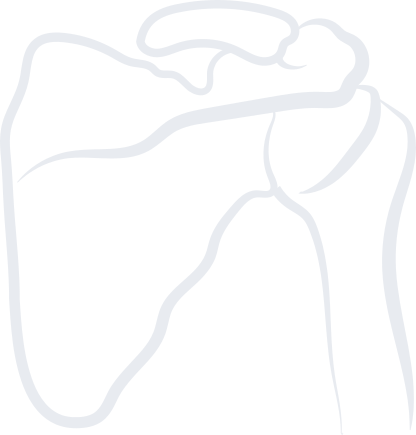
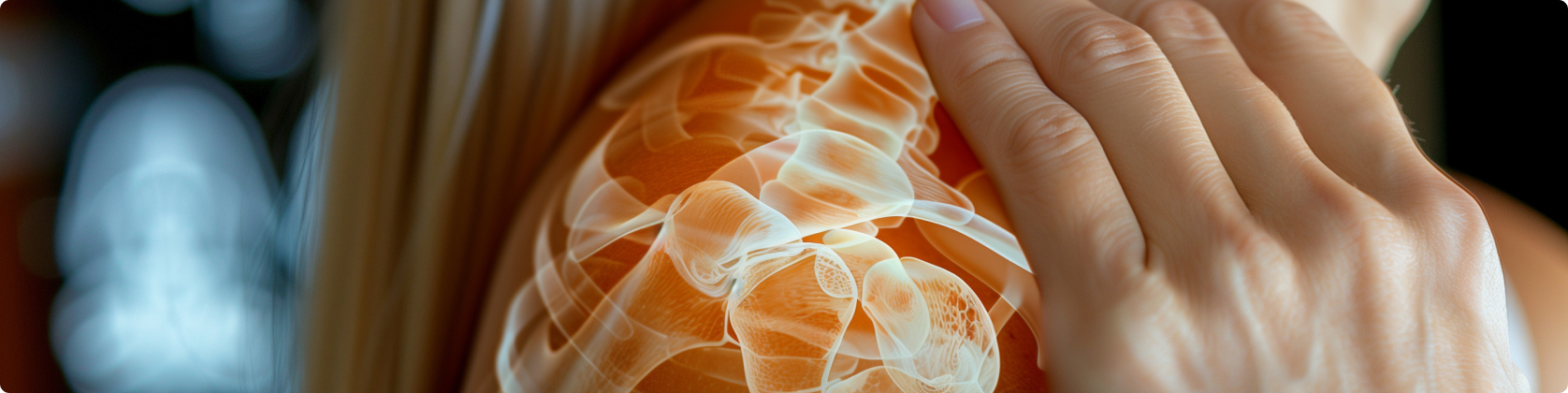
Shoulder instability after a traumatic event is one the most common shoulder injuries documented. Its incidence is many times more common in military personnel as well as contact athlete patients (i.e. martial arts, football, basketball, rugby etc.). Patients with epilepsy are also more prone to dislocation during seizures. This type of injury also comes with a propensity to recur which is directly related to the age at the first dislocation, e.g. patients younger than 20 at their first dislocation have a 90% chance of a second one occurring in the following years. The most common direction of shoulder dislocation is anterior, while less common variants exist, such as the posterior shoulder dislocation or the multi-directional shoulder instability pattern. This section will focus on traumatic anterior shoulder instability.
The shoulder joint is an extremely mobile and, thus, inherently unstable joint. Stability is, however, achieved through various static and dynamic restraints to uncontrollable shoulder motion. The former include the conformity of the joint surfaces of the humerus and the scapula, the articular capsule that envelops them, the glenohumeral ligaments that act as checkreins to specific shoulder motions, and the labrum, a fibrocartilaginous tissue surrounding the rim of the glenoid (the scapular socket) and increasing its functional depth by 50%. Dynamic restraints include the rotator cuff muscles and the rotator interval, the periscapular muscles and the long head of the biceps tendon.
The most common mechanism by which an anterior shoulder dislocation occurs is the application of an anteriorly directed force to the abducted and externally rotated shoulder. During the course of the dislocation of the humeral head from the glenoid, a number of soft tissue and bony injuries can occur, the identification of which is important when diagnosing and treating these injuries. These include: the Bankart lesion, the humeral avulsion of the glenohumeral ligament (HAGL) lesion, the glenoid labral articular defect (GLAD) lesion, the anterior labral periosteal sleeve avulsion (ALPSA) lesion, the bony Bankart lesion, the Hill-Sachs defect and fractures of the greater or lesser tuberosities of the humerus ( the insertion points of the rotator cuff muscles to the humerus). Also, rotator cuff tears can occur along with a shoulder dislocation and their incidence increases with the patient’s age (e.g. 30% in the over forties vs. 80% in the over sixties). Nerve injuries can be associated with a dislocation, the most common being a transient neurapraxia of the axillary nerve presenting as numbness over the deltoid area. Finally, it is important to consider and examine for the presence of global hyperlaxity in patients with a shoulder dislocation as this can affect the treatment strategy.
Patients dislocating for the first time often present after a distinct traumatic event. As the number of dislocations increases or in cases of soft tissue hyperlaxity, the amount of force needed for the shoulder to dislocate decreases significantly, a simple movement, e.g., to reach a bag from the backseat while driving being sufficient. Sometimes patients may even be able to voluntarily subluxate, i.e. nearly dislocate, their shoulder. Common symptoms of shoulder instability other than the actual dislocations include the joint feeling unstable as well as shoulder pain. Clinical examination by an orthopedic surgeon involves a variety of different tests and maneuvers to demonstrate the instability.
Imaging in shoulder instability begins with plain radiographs that is almost always followed by a magnetic resonance imaging (MRI), with which the soft tissues involved but also the bone of the glenoid can be better visualized. To further increase the diagnostic acuity of the MRI in evaluating soft-tissue injuries, gadolinium contrast media can be injected into the joint, thus performing an MR arthrogram.
Acute shoulder dislocations must be reduced urgently by appropriately trained professionals either on site or in the emergency department, though it is not uncommon for a spontaneous reduction to occur. This is followed by a brief period of immobilization in a sling (one to two weeks maximum for plain dislocations) after which physical therapy begins aiming at strengthening the rotator cuff and periscapular muscles. Return to play/function can usually be expected in one to three weeks. However, it is crucial to consider the risk of recurrence which may be unacceptably high in the younger than 20 years old, males, contact sport athletes, hyper-lax patients, and in cases where glenoid bone loss is greater than 20-25% or there is a concomitant greater tuberosity fracture. With regard to glenoid bone loss specifically, it must be noted that each new dislocation shears off roughly 7% of bone from the anterior-inferior glenoid rim, thus leading to progressively greater instability. The cut-off value for characterizing bone loss as critical and, thus, dictating bone-stock restoration procedures is 20-25%. However, many experts advocate that a sub-critical value of 13,5% may also lead to unacceptably high re-dislocation rates.
As such surgical treatment of shoulder instability may be necessary. This involves arthroscopic or open procedures, aiming to restore the integrity, continuity or tension of the stabilizing soft tissues or the bone stock of the glenoid when this has been critically compromised. For first-time dislocators younger than 25, high demand athletes, patients with recurrent instability and less than 20-25% glenoid bone loss arthroscopic Bankart repair is the surgery of choice. However, should a failed arthroscopic repair have preceded or in the event of a concomitant glenoid fracture (bony Bankart lesion), a hyper-lax patient or a HAGL lesion, provided glenoid bone loss remains less than 20-25% (or in some cases no more than 13,5%), an open Bankart repair is more appropriate.
When the bony deficiency of the glenoid exceeds 20-25%, bone-block procedures are indicated to restore both anatomy and stability. These include the Latarjet-Bristow procedure, where the coracoid process (a neighboring bony eminence of the scapula) along with its tendinous attachment is transferred and fixed with screws to the anterior rim of the glenoid. Another option is the use of tricortical bone graft from the patient’s own pelvis or from that of a cadaveric donor to be fixed in a similar fashion and thus restore the bony deficiency of the glenoid.
Additional procedures to open or arthroscopic surgery include the remplissage technique of “filling” with soft tissue a large Hill-Sachs lesion on the humeral head or, for even larger lesions, the use of bone graft. Tendon transfers are also another adjunct in cases of irreparable, concomitant rotator cuff tears.
In conclusion, shoulder instability includes various forms of injury patterns to the shoulder and can be associated with many associated soft-tissue and bony lesions which dictate its tendency to recur. Treatment of acute dislocations is always an urgent reduction followed by brief immobilization and physical therapy. However, younger, more active patients, professional athletes (especially in contact sports) and those with recurrent instability will require appropriate surgical treatment to ensure optimal outcomes and return to play.
to guide you about your condition, to choose the best possible treatment.
We use cookies to improve your experience on our site. By using our site, you consent to cookies.
Manage your cookie preferences below:
Essential cookies enable basic functions and are necessary for the proper function of the website.
These cookies are needed for adding comments on this website.
Google reCAPTCHA helps protect websites from spam and abuse by verifying user interactions through challenges.
Google Tag Manager simplifies the management of marketing tags on your website without code changes.
Marketing cookies are used to follow visitors to websites. The intention is to show ads that are relevant and engaging to the individual user.
Google Maps is a web mapping service providing satellite imagery, real-time navigation, and location-based information.
Service URL: policies.google.com (ανοίγει σε νέο παράθυρο)


