
Orthopedic condition
Bunion (Hallux Valgus)
Hallux valgus is a common deformity of the forefoot, characterised by valgus deviation of the big toe and medial deviation of the first metatarsal, resulting in a bony prominence on the inner side of the first metatarsophalangeal joint (the well-known “bunion”).
Dr. Ioannis Tsarouhas, Orthopedic Surgeon with a clinical interest in conditions of the foot, treats hallux valgus on an individual basis, from conservative management to modern surgical correction techniques.
What is hallux valgus?
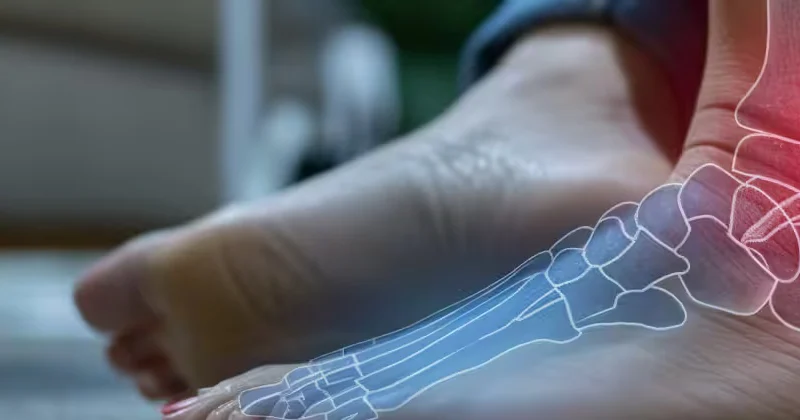
In hallux valgus, the normal alignment of the first metatarsophalangeal joint is disturbed. The big toe deviates outwards, while the first metatarsal deviates inwards.
The deformity leads to medial prominence of the head of the first metatarsal, creating the characteristic “bunion”, which can cause pain, inflammation and difficulty wearing shoes. Over time, the deformity may worsen and affect the position and function of the neighbouring toes.
Causes and risk factors
Hallux valgus has a multifactorial aetiology. The main factors are:
- Hereditary predisposition: The most important factor. The foot type (its structure and shape) that predisposes to the deformity is often inherited.
- Female sex: The condition is much more common in women.
- Unsuitable footwear: Narrow shoes and high heels do not cause the deformity on their own, but they accelerate its progression and worsen the symptoms.
- Flat feet and other foot disorders.
- Inflammatory conditions, such as rheumatoid arthritis.
- Ligament laxity.
Clinical picture – Symptoms
The symptoms of hallux valgus include:
- A visible bony prominence (“bunion”) on the inner side of the base of the big toe.
- Pain and tenderness in the area of the prominence, especially when wearing shoes and walking.
- Redness and inflammation of the skin over the prominence, due to friction.
- Deviation of the big toe towards the other toes.
- Secondary problems in the other toes (e.g. hammer toe), corns and calluses.
- Difficulty finding comfortable shoes.
Diagnosis
The diagnosis is primarily clinical, based on the typical appearance of the deformity. X-rays – ideally taken standing (weight-bearing) – are essential for the objective assessment of the severity of the deformity (with specific angle measurements), the evaluation of the condition of the joint and the planning of any surgical correction.
Treatment
Treatment depends on the severity of the deformity and, above all, on the intensity of the symptoms.
Conservative treatment
Conservative treatment does not correct the deformity, but it can relieve the symptoms and slow its progression:
- Suitable footwear: comfortable, wide at the front, with a low heel.
- Orthotic devices and toe spacers, which relieve pressure.
- Insoles (orthotic insoles), especially when there is a coexisting disorder of the static alignment of the foot.
- Anti-inflammatory medication to control pain during flare-ups.
- Exercises and a night splint: exercises that maintain the flexibility of the joints, and a night splint that holds the big toe straight, provide relief.
Surgical treatment
When the pain is severe and persistent and affects daily life, or when the deformity is advanced, surgical correction is indicated. There are many techniques – usually osteotomies that reshape and realign the first metatarsal and the big toe – the choice of which depends on the severity of the deformity and the characteristics of each case. The aim is to correct the deviation, remove the bony prominence and restore pain-free function of the foot.
Rehabilitation
Rehabilitation after surgical correction depends on the technique used. As a rule, the patient uses a special postoperative shoe for a period, which allows protected weight-bearing, while complete healing of the osteotomies and the return to normal footwear usually take several weeks. Elevating the foot in the first few days, controlling the swelling and gradual mobilisation, in accordance with the surgeon’s instructions, are important for an excellent result.
Realistic expectations of the correction
It is important that a patient who is about to undergo surgical correction of hallux valgus has realistic expectations. The aim of the operation is primarily relief from pain and restoration of functional, pain-free walking and shoe wear – and secondarily improvement of the appearance of the foot.
Recovery requires patience, as it involves the healing of osteotomies, and the final result matures over a period of months, as the swelling also gradually subsides. In addition, maintaining the result requires continuing to wear suitable footwear. With the right expectations, the right choice of technique and adherence to the postoperative instructions, patient satisfaction with the correction is generally high.
Cost of treatment
The cost depends on the type of treatment (conservative or surgical), the surgical technique, the materials, the hospital, as well as the insurance cover. In most cases of surgical treatment, private insurance policies and insurance funds cover a significant part of the expense.
Precise information is provided on an individual basis, after the clinical assessment. The clinic is at your disposal for any relevant information.
More on the factors that determine the cost and on cover by insurance funds: Cost of surgery.
Secondary problems and associated deformities
Hallux valgus rarely remains an “isolated” problem. As the big toe deviates and “pushes” the neighbouring toes, it can cause a chain of secondary deformities and problems in the forefoot:
- Hammer toe deformity of the lesser toes, which become permanently “bent”.
- Dropped metatarsals and metatarsalgia, as the distribution of loads changes.
- Corns and calluses, at the points of excessive pressure.
- Bursitis (inflammation) in the area of the bony prominence.
This tendency of the deformity to “drag along” other structures as well is one of the reasons why timely treatment and proper evaluation by a specialised doctor matter – so that the treatment plan takes the whole forefoot into account, and not just the “bunion”.
Frequently asked questions
Do narrow shoes cause a "bunion"?
They are not the only cause – the most important factor is hereditary predisposition. However, narrow shoes and high heels accelerate the progression of the deformity and worsen the symptoms.
Can it be corrected without surgery?
No. Conservative treatment relieves the symptoms and may slow progression, but it does not correct the deformity itself. Definitive correction is achieved only surgically.
Do I definitely need surgery?
Not necessarily. Surgical correction is recommended when the pain is severe and affects daily life, not for purely cosmetic reasons in asymptomatic cases.
Can it recur after surgery?
With modern techniques and the correct choice of the appropriate operation for each case, the results are generally very good and lasting. Adherence to the postoperative instructions and suitable footwear help to avoid recurrence.
Is the cost covered by insurance?
In most cases of surgical treatment, private insurance policies and insurance funds cover part or all of the expense. The clinic can give you detailed information.
Is it only a cosmetic problem?
No. Beyond appearance, hallux valgus often causes significant pain, difficulty wearing shoes and secondary problems in the other toes. Surgical correction is recommended for the symptoms, not for purely cosmetic reasons.
Contact
Book an appointment with Dr. Tsarouhas
Fill in the form with the time that suits you and we will contact you, or call us directly.
Call us 210 6464 744-
Petroupoli 1 Agias Triados St., 132 31 210 5011 717
-
Heraklion, Crete 49 Kyrillou Loukareos St., 712 01
Appointment request
We reply to every request on the same or the next working day.
Your details are used solely to contact you.