
Orthopedic condition
Knee Replacement Loosening
Loosening of a knee replacement is one of the most common causes of failure of an artificial joint and of the need for revision. It is the progressive loss of the secure fixation of the implants to the bone, which causes pain and impaired function. Recognising it early is decisive for effective treatment.
Dr. Ioannis Tsarouhas, Orthopedic Surgeon specialising in joint replacement and revision surgery of the major joints, diagnoses and treats loosening of knee replacements, with the aim of restoring the stability and function of the joint.
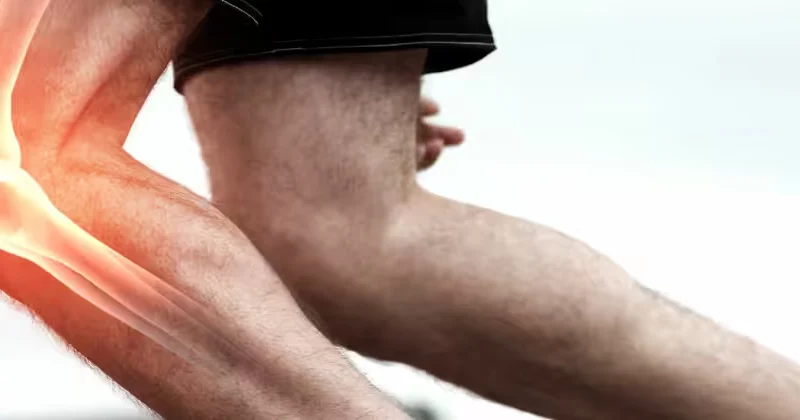
What is loosening of a joint replacement?
In a total knee replacement, the artificial implants (prostheses) are fixed securely to the bone — either with special bone cement or through the growth of bone into their porous surface. This secure fixation is essential for the joint to function properly.
Loosening is the progressive loss of this secure bond between the implant and the bone. When the implant “loosens”, it begins to move slightly within the bone under load, which causes pain, inflammation and gradual loss of function. Loosening is one of the main reasons why a joint replacement may, in the long term, need revision.
Types of loosening
Loosening of a joint replacement is divided into two main types, with different causes:
- Aseptic loosening: This is the most common form and is not caused by bacteria. It is caused mainly by the gradual wear of the polyethylene (the plastic insert that acts as “cartilage”). The microscopic particles produced by this wear trigger a reaction of the body, which leads to gradual resorption of the bone around the implant (osteolysis) and, ultimately, to loosening.
- Septic loosening: This is due to infection (bacteria) around the implant. The inflammation caused by the infection undermines the fixation of the prosthesis. Septic loosening requires completely different treatment from aseptic loosening, which is why distinguishing between the two is critical.
Causes and risk factors
Loosening can result from various factors:
- Normal wear of the polyethylene over the years — the most common reason for aseptic loosening.
- Increased mechanical stress, due to high body weight or high-impact activities.
- Incorrect initial positioning or alignment of the implants, which leads to asymmetric loading.
- Infection, in the case of septic loosening.
- Bone quality and certain metabolic conditions.
Accurate identification of the cause is essential for the right treatment.
Clinical presentation – Symptoms
The main symptom of loosening is pain, which often:
- Appears or worsens after a period during which the joint replacement was functioning well.
- Worsens with weight-bearing and activity and is relieved by rest (characteristic of aseptic loosening).
- Is accompanied by a feeling of instability or of the joint “giving way”.
Other symptoms may include swelling, stiffness and, in the case of infection, redness, warmth or even fever. The appearance of such symptoms in a patient with a joint replacement should always be investigated.
Diagnosis
The diagnosis of loosening — and, above all, the distinction between aseptic and septic — is decisive and requires a specialised approach. The work-up includes:
- Clinical examination and history, with emphasis on the character of the pain and how it has evolved over time.
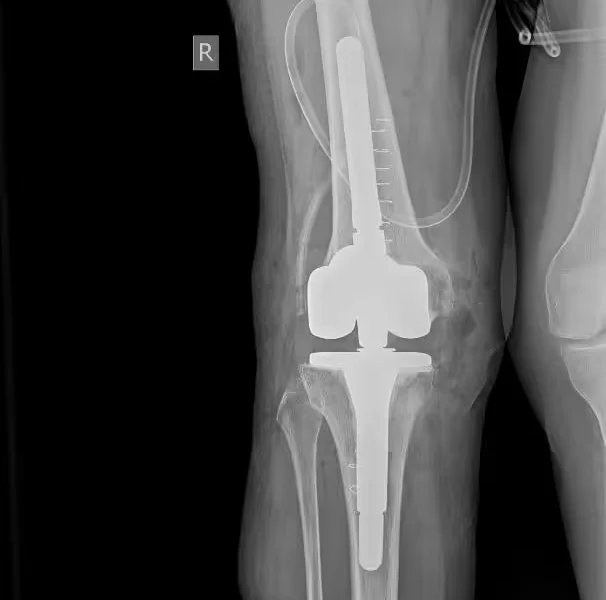
- X-rays, often taken sequentially over time, which show signs of loosening, such as radiolucent lines around the implant, a change in its position or osteolysis.
- Laboratory tests for inflammatory markers, when infection is suspected.
- Joint aspiration with culture of the joint fluid, when a septic cause must be excluded or confirmed.
- Advanced imaging (e.g. a bone scan), in selected cases.
The correct diagnosis of the cause is absolutely decisive, as treatment differs radically depending on whether the loosening is aseptic or septic.
Treatment
The definitive treatment of loosening of a joint replacement is, as a rule, revision of the joint replacement — an operation in which the loose implants are removed and replaced with new ones.
In aseptic loosening, revision is usually performed in one stage: removal of the old implants, reconstruction of any bone defects and implantation of a new revision prosthesis.
In septic loosening, treatment is more complex and is often carried out in two stages: removal of the implants and placement of a temporary antibiotic-loaded spacer, intensive antibiotic treatment to eradicate the infection, and, at a second operation, implantation of the definitive prosthesis.
The choice of strategy is individualised and requires experience and specialisation, as revision operations are technically demanding.
The relationship between loosening and revision
It is important to understand the relationship between loosening (the condition) and revision (the operation). Loosening is the problem: the progressive failure of the fixation of the implant. Revision is the solution: the surgical replacement of the loose implants.
Not every case of loosening, however, leads immediately to revision. In patients with mild, early loosening and limited symptoms, close monitoring may be chosen initially, with regular X-rays to assess progression. The decision to revise is taken when the symptoms worsen, the loosening progresses or there is a threat of significant bone loss. This individualised approach ensures that revision — a major operation — is performed at the right time.
Prevention and follow-up
Although loosening cannot always be prevented, certain measures reduce the risk and allow it to be recognised early:
- Maintaining a healthy body weight and avoiding high-impact activities
- Prompt treatment of any infection in the body, so that it does not spread to the prosthesis
- Informing every doctor and dentist that you have a joint replacement, before invasive procedures
- Regular follow-up X-rays of the joint replacement, even without symptoms, so that any early loosening is detected in time
How aseptic loosening progresses
Aseptic loosening — the most common form — deserves particular understanding, as it progresses through a characteristic “vicious circle”. It all begins with the normal wear of the polyethylene, the plastic insert that acts as the bearing surface of the joint. As the polyethylene wears, it releases microscopic particles into the joint.
The body perceives these particles as “foreign bodies” and activates an inflammatory reaction to remove them. The problem is that this reaction, in its effort, also “erodes” the healthy bone around the implant — a process called osteolysis. As the bone is resorbed, the implant loses its support and begins to loosen. Loosening, in turn, increases abnormal movement and accelerates wear, feeding the cycle.
Understanding this mechanism explains why regular follow-up is important: osteolysis can progress “silently” for a long time before marked symptoms appear, and detecting it early allows a less complex revision.
Why early diagnosis makes the difference
The timing of the diagnosis of loosening directly affects the complexity of treatment. When loosening is detected early — before osteolysis has caused extensive bone loss — revision is technically simpler and the remaining bone stock more adequate.
In contrast, loosening that is left to progress leads to progressive destruction of the bone around the implant, making the subsequent revision more complex and demanding, with a need for bone grafts or special augments. This is why regular follow-up X-rays of the joint replacement — even without symptoms — and prompt investigation of any new pain are of decisive importance.
Cost of treatment
As the definitive treatment of loosening is revision, the cost depends on the cause (aseptic or septic) and the complexity of the operation, the specialised implants and materials, the possible need for two-stage treatment, the hospital and the length of stay, as well as the patient’s insurance cover. In most cases, private insurance policies and insurance funds cover a significant part of the expense.
Precise information is given on an individual basis, after the diagnostic work-up. The practice is at your disposal for any relevant information.
More on the factors that determine the cost and on cover by insurance funds: Cost of surgery.
The role of regular follow-up
Experience has shown that regular follow-up of a joint replacement is the most effective tool for the early recognition of loosening. A scheduled follow-up X-ray — even in a patient without symptoms — can reveal the first signs of osteolysis or loosening while they are still limited.
This early recognition has practical value: it allows a revision to be planned at the right moment, before bone loss becomes extensive, making the next operation simpler and with a better prognosis. This is why patients with a joint replacement are encouraged to stay in contact with their surgeon and not to miss their scheduled follow-up appointments.
Frequently asked questions
What does “loosening” of a joint replacement mean?
It means the progressive loss of the secure fixation of the implants to the bone. The implant begins to move slightly under load, causing pain and impaired function.
What is the difference between aseptic and septic loosening?
Aseptic loosening is not caused by bacteria, but mainly by wear of the polyethylene and osteolysis. Septic loosening is caused by infection. The distinction is critical, as treatment differs radically.
How will I know that my joint replacement has loosened?
The main sign is new or worsening pain, particularly after a period of good function, that gets worse with weight-bearing. The definitive diagnosis is made with X-rays and, where necessary, laboratory tests.
How is it treated?
The definitive treatment is revision of the joint replacement — removal of the loose implants and implantation of new ones. In septic loosening, treatment is often carried out in two stages.
Can loosening be prevented?
It cannot always be prevented, but maintaining a healthy weight, avoiding high-impact activities, prompt treatment of infections and regular follow-up X-rays reduce the risk and allow early recognition.
Is the cost covered by insurance?
In most cases, private insurance policies and insurance funds cover part or all of the expense. The practice can give you detailed information.
Is loosening dangerous?
Loosening in itself is not life-threatening, but it causes pain and impaired function and, if left, leads to progressive destruction of the bone. Septic loosening (due to infection) is more serious and requires immediate, specialised treatment.
How often should a joint replacement be checked?
Regular follow-up X-rays are recommended, even without symptoms, so that any early loosening or osteolysis is detected in time, while treatment is still simpler.
Can I keep walking on a loose joint replacement?
Many patients can, but with pain and impaired function that get worse. Continuing to bear weight on a significantly loose prosthesis can accelerate bone loss, which is why prompt assessment is needed.
Will I know straight away if my joint replacement loosens?
Not always. Aseptic loosening and osteolysis can progress “silently” for a long time. This is why regular follow-up X-rays are important even without symptoms.
Contact
Book an appointment with Dr. Tsarouhas
Fill in the form with the time that suits you and we will contact you, or call us directly.
Call us 210 6464 744-
Petroupoli 1 Agias Triados St., 132 31 210 5011 717
-
Heraklion, Crete 49 Kyrillou Loukareos St., 712 01
Appointment request
We reply to every request on the same or the next working day.
Your details are used solely to contact you.