
Orthopedic condition
Metatarsalgia (Dropped Metatarsals)
Dropped metatarsals (or metatarsalgia) is a common condition of the forefoot, in which the normal distribution of loads in the area of the metatarsals is disturbed, causing pain, calluses and discomfort when walking. It is one of the most common causes of pain in the “ball” of the foot.
Dr. Ioannis Tsarouhas, Orthopedic Surgeon with a clinical interest in conditions of the foot, treats dropped metatarsals on an individual basis, with an emphasis on conservatively restoring the correct distribution of loads.
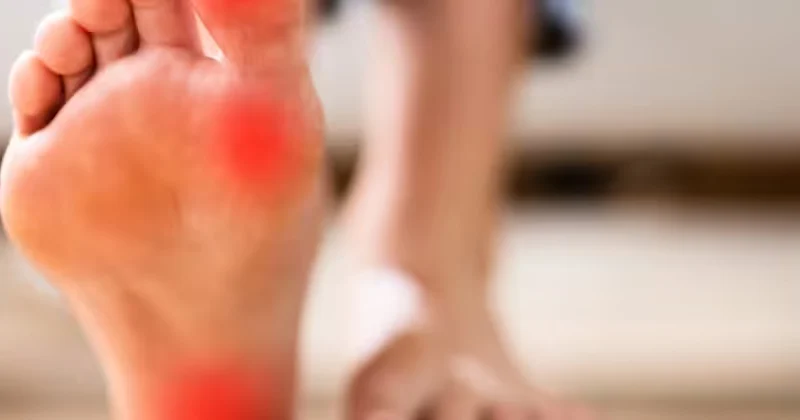
What are dropped metatarsals?
The metatarsals are the five long bones of the forefoot, which end in their heads, just behind the base of the toes. In a normal foot, the metatarsal heads form a slight transverse arch and body weight is distributed evenly between them during walking.
In dropped metatarsals, this transverse arch “flattens” or collapses, with the result that one or more metatarsal heads “drop” lower and take excessive, uneven load. This chronic overloading causes pain, inflammation and the formation of hard calluses (callosities) at the point of pressure, under the sole of the foot.
Causes and risk factors
Dropped metatarsals are associated with various factors:
- Disorders of the static alignment of the foot (e.g. high-arched foot, axis abnormalities).
- Unsuitable footwear: High heels and narrow, pointed shoes shift the weight onto the forefoot.
- Coexistence with other deformities, such as hallux valgus (bunion) or hammer toe.
- Increased body weight, which puts strain on the forefoot.
- Age: The natural loss, with age, of the subcutaneous fat “pad” beneath the metatarsal heads.
- Inflammatory conditions, such as rheumatoid arthritis.
- Intense sporting activity with repetitive strain on the forefoot.
Clinical picture – Symptoms
The symptoms of dropped metatarsals include:
- Pain in the forefoot (metatarsalgia), just behind the base of the toes.
- A feeling of “walking on a pebble” or on a wrinkled sock.
- Worsening with walking, standing and wearing shoes, and relief with rest and taking the shoes off.
- Hard calluses (callosities) on the sole, beneath the heads of the overloaded metatarsals.
- Burning, numbness or tingling in the toes, in some cases.
Diagnosis
The diagnosis is based on the history, the clinical examination – locating the points of pain and the calluses – and the assessment of the static alignment of the foot. X-rays (ideally weight-bearing) help to assess the anatomy and axis of the metatarsals and to rule out other conditions. Differential diagnosis from other causes of forefoot pain, such as Morton’s neuroma or stress fractures, is important.
Treatment
The great majority of cases are treated successfully by conservative means, which aim to restore the correct distribution of loads and relieve the overloaded area.
Conservative treatment
- Orthotic insoles with metatarsal support: The main treatment tool. Specially shaped insoles (often with a metatarsal pad) “lift” and support the transverse arch, offloading the affected metatarsal heads.
- Suitable footwear: comfortable, wide, with a low heel and a soft, cushioning sole.
- Activity modification and control of body weight.
- Local care of the calluses and anti-inflammatory treatment to control pain.
- Exercises and physiotherapy to strengthen the muscles of the foot.
Surgical treatment
In the rarer cases that do not respond to conservative treatment, or when other deformities coexist that need to be corrected, surgical treatment may be required – usually osteotomies of the metatarsals, which restore the correct position and load distribution. The choice of technique is individualised.
Why proper treatment matters
Dropped metatarsals, if left untreated, tend to worsen, as chronic overloading maintains a vicious circle of pain and inflammation. In addition, the condition is often associated with – or leads to – other deformities of the forefoot. Timely treatment, by restoring the correct distribution of loads, not only relieves the symptoms but can also prevent progression and the appearance of further problems.
The role of orthotic insoles
Orthotic insoles with metatarsal support are the cornerstone of the treatment of dropped metatarsals, and it is worth explaining why they are so effective. The problem, in essence, is mechanical: the transverse arch has “collapsed” and certain metatarsal heads take excessive load.
A properly designed insole, with a special support just behind the metatarsal heads, “lifts” and supports the arch, redistributing the weight and taking the pressure off the overloaded points. In this way, the actual cause of the pain – the mechanical overloading – is addressed, and not just the symptom. For optimal results, the insoles should ideally be customised to the anatomy of each foot.
Cost of treatment
The cost depends on the type of treatment (orthotic insoles, physiotherapy or – more rarely – surgery) and the insurance cover. Precise information is provided on an individual basis, after the clinical assessment. The clinic is at your disposal for any relevant information.
More on the factors that determine the cost and on cover by insurance funds: Cost of surgery.
The relationship with other forefoot deformities
Dropped metatarsals rarely occur in isolation. They are often part of a wider problem of the forefoot, coexisting with hallux valgus (bunion), hammer toe or other disorders of the static alignment of the foot. These deformities often feed one another: one alters the distribution of loads, putting strain on the others. In hallux valgus, the first metatarsophalangeal joint is often painless, but pain may secondarily appear under the head of the second, third or even fifth metatarsal (as walking is done with the weight on the outer edge of the foot).
For this reason, the treatment of dropped metatarsals requires an overall assessment of the whole foot, and not only of the point of pain. A comprehensive treatment plan – which takes all the coexisting deformities into account – is what ensures the best and most lasting result.
Frequently asked questions
What is metatarsalgia?
It is pain in the forefoot, in the area of the metatarsal heads. Dropped metatarsals – the disturbance of the transverse arch – are one of its most common causes.
Why do calluses form on the sole of the foot?
Hard calluses (callosities) form at the points where the “dropped” metatarsal heads take excessive, uneven pressure during walking. They are a sign of overloading.
Do orthotic insoles help?
Yes, significantly. Special orthotic insoles with metatarsal support are the main treatment tool, as they offload the affected heads and restore the correct distribution of loads.
Is surgery needed?
In the great majority of cases, no. Conservative treatment with orthotic insoles, suitable footwear and activity modification is usually effective. Surgery is reserved for resistant cases.
Is the cost covered by insurance?
Cover depends on the type of treatment and the insurance policy. The clinic can give you detailed information.
How does it differ from Morton's neuroma?
Both cause pain in the forefoot, but dropped metatarsals are associated with mechanical overloading of the heads (and calluses), whereas Morton’s neuroma causes burning pain and numbness in the toes due to irritation of a nerve. Distinguishing correctly between them is important for treatment.
Does it get worse over time?
Without treatment, dropped metatarsals tend to worsen, as chronic overloading maintains the pain and inflammation and may lead to further deformities. Timely treatment with orthotic insoles helps to prevent progression.
Contact
Book an appointment with Dr. Tsarouhas
Fill in the form with the time that suits you and we will contact you, or call us directly.
Call us 210 6464 744-
Petroupoli 1 Agias Triados St., 132 31 210 5011 717
-
Heraklion, Crete 49 Kyrillou Loukareos St., 712 01
Appointment request
We reply to every request on the same or the next working day.
Your details are used solely to contact you.