
Surgical technique
Partial Knee Replacement
Unicompartmental (partial) knee replacement is the operation in which only the part of the knee affected by arthritis is restored with an artificial implant, keeping the healthy part of the joint completely intact. In this way, the normal kinematics of the knee are restored quickly and with minimal pain.
It is a less invasive alternative to total knee replacement, ideal for selected patients with wear confined to a single compartment of the knee. Dr. Ioannis Tsarouhas, Orthopedic Surgeon specialising in minimally invasive techniques and with extensive experience in knee replacement, applies the method with the aim of preserving as much of the natural joint as possible.
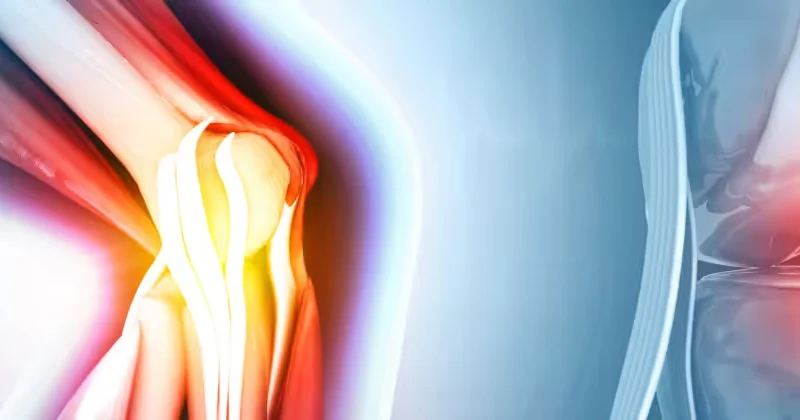
What is unicompartmental knee replacement?
The knee is divided, functionally, into three “compartments”: the medial (inner), the lateral (outer) and the patellofemoral (at the front, between the patella and the femur). In many patients with osteoarthritis, the wear does not involve the whole knee but is confined to a single compartment — most commonly the medial.
In unicompartmental knee replacement, only this affected compartment is replaced with an artificial prosthesis, while the remaining healthy parts of the joint —together with the ligaments— are kept intact. Unlike total knee replacement, in which the entire articular surface is replaced, here the intervention is targeted and more “economical” in terms of bone removal.
Medial unicompartmental knee replacement is the one performed most often, as most of the forces acting on the knee pass through the medial compartment, with the result that greater wear also appears there. Lateral unicompartmental knee replacement is performed more rarely, as the lateral compartment is affected less often.
Anatomy of the knee and its compartments
To understand unicompartmental knee replacement, we first need to see how the knee is functionally “divided”. The joint is formed by three bones —the femur, the tibia and the patella— and their surfaces are covered by articular cartilage, which allows pain-free gliding.
Functionally, the knee is divided into three compartments: the medial (the inner side, which bears most of the load during walking), the lateral (the outer side) and the patellofemoral (at the front, where the patella glides over the femur). The stability of the joint is provided by the collateral and cruciate ligaments, while the menisci act as “shock absorbers”.
In osteoarthritis, the wear may involve all three compartments or be confined to just one. It is precisely this distinction that determines whether a patient is suitable for unicompartmental replacement (wear of one compartment) or for total knee replacement (diffuse wear).
Advantages of the method
Unicompartmental knee replacement offers significant advantages over total replacement in appropriately selected patients:
- More natural movement of the knee, as both the anterior and the posterior cruciate ligament, which are responsible for the normal kinematics of the joint, are preserved.
- Less damage to muscle tissue and a smaller wound.
- Less bone removed, which makes any future operation easier.
- Minimal post-operative pain and less blood loss.
- Shorter hospital stay and faster recovery.
- Suitability for younger and more active patients, always in comparison with total knee replacement.
It should be noted, however, that the revision rate is slightly higher than with total knee replacement, as arthritis may over time extend to the remaining compartments of the knee.
Requirements and indications
The success of unicompartmental knee replacement depends decisively on correct patient selection. For someone to be a suitable candidate, certain requirements must be met:
- Wear confined to a single compartment of the knee.
- Pre-operatively correctable varus or valgus deformity (the “crookedness” of the knee).
- Adequate range of motion: the knee can bend to at least 100 degrees.
- Extension deficit of less than 10 degrees (the knee can straighten almost fully).
Conversely, the method is not indicated in arthritis caused by inflammatory diseases, such as rheumatoid or psoriatic arthritis, as these affect the whole joint diffusely. Very high body weight (above approximately 120 kg) is also a relative contraindication, because of excessive loading of the prosthesis.
Symptoms that lead to the operation
Patients who end up being candidates for unicompartmental knee replacement as a rule present the typical symptoms of osteoarthritis, but characteristically localised to one side of the knee:
- Pain located mainly on the medial (inner) side of the knee, in the case of the more common medial osteoarthritis
- Pain that worsens with weight-bearing, walking and using stairs
- Stiffness, especially after rest
- Gradual development of mild deformity (varus or valgus) of the limb
- Nevertheless, a preserved good range of motion and joint stability
This localised picture, combined with radiographic findings showing wear confined to one compartment, is what steers the decision towards unicompartmental rather than total knee replacement.
How the operation is performed
Unicompartmental knee replacement is performed under general or spinal anaesthesia, through a smaller incision than for total knee replacement. The surgeon removes only the worn cartilage and a minimal amount of bone from the affected compartment and places the individualised implants (one metal component on the femur and one on the tibia, with polyethylene in between), leaving the healthy parts and the cruciate ligaments intact.
The preservation of the ligaments and of most of the natural joint is precisely why patients often report that the knee “feels more natural” after a unicompartmental than after a total knee replacement.
Possible complications
As with any surgical operation, certain complications may occur in unicompartmental knee replacement, but they are very rare. The orthopedic surgeon informs the patient in detail about all possible risks and takes all necessary preventive measures. The most common possible complications are:
- Thrombosis: anticoagulants are given for prevention.
- Infection: antibiotics are given for prevention.
- Injury to nerves or blood vessels (extremely rare).
- Persistent pain in the knee despite the operation, often when arthritis extends to other compartments.
Recovery
One of the main advantages of unicompartmental knee replacement is the faster and less painful recovery compared with total replacement. The hospital stay is shorter, post-operative pain is milder, and weight-bearing on the limb starts immediately after surgery.
The patient may need crutches for the first days or weeks, until they are able to walk unaided. At the same time, they follow an individualised exercise programme —alone or with the help of a physiotherapist— to maintain range of motion and restore muscle strength. In most cases, the patient returns to their pre-operative activities within approximately four weeks.
Unicompartmental or total knee replacement?
This question is central for every patient with knee osteoarthritis. The answer depends mainly on the extent of the wear: when it is confined to one compartment and the requirements are met, unicompartmental replacement offers a more natural feel and faster recovery. When, however, arthritis has extended to more compartments or is due to an inflammatory disease, total knee replacement is the appropriate solution.
The choice is always made on an individual basis, after detailed clinical and radiographic assessment. The role of the experienced surgeon is decisive, both in correct patient selection and in the technically demanding execution of the operation.
The role of correct patient selection
Unicompartmental knee replacement is considered a technically demanding operation — perhaps more demanding, in terms of planning and precision, than total knee replacement itself. The reason is that its success rests on two pillars: correct patient selection and flawless surgical execution.
Selecting the right patient is the key: a patient whose wear has already begun to extend to other compartments, or who has inflammatory arthritis, will not benefit from the method and will rightly be directed towards total knee replacement. By contrast, in an appropriately selected patient, unicompartmental replacement offers a result comparable to that of total knee replacement, with the added benefit of a more natural feel and faster recovery.
For this reason, the surgeon’s experience and specialised training, combined with detailed pre-operative evaluation, are decisive for an excellent and long-lasting result.
The role of physiotherapy in rehabilitation after surgery
Physiotherapy is an integral part of rehabilitation after unicompartmental knee replacement. Thanks to the preservation of the cruciate ligaments and of most of the natural joint, the rehabilitation programme is as a rule faster and less demanding than that of total knee replacement.
The programme focuses on rapidly regaining range of motion, strengthening the quadriceps and the muscles that stabilise the knee, and restoring balance and a normal gait. The patient’s active participation and consistency with the exercises and post-operative instructions are what ultimately turn a successful operation into full functional recovery.
Cost of unicompartmental knee replacement
The cost of unicompartmental knee replacement depends on the type and materials of the implants, the hospital and room category, the length of stay, and the patient’s insurance cover — private insurance policies and insurance funds cover a significant part of the expense in most cases.
Precise information on cost is always provided on an individual basis, after the clinical examination and once the treatment plan has been defined. The practice is at your disposal for any relevant information.
More on the factors that determine the cost and on cover by insurance funds: Cost of surgery.
Frequently asked questions
What is the difference between unicompartmental and total knee replacement?
In unicompartmental replacement only the one affected compartment of the knee is replaced, preserving the healthy parts and the cruciate ligaments. In total replacement the entire articular surface is replaced. Unicompartmental replacement is less invasive, but requires wear confined to one compartment.
Who are suitable candidates?
Patients with osteoarthritis confined to one compartment, with adequate range of motion (flexion ≥100°, extension deficit <10°), without inflammatory arthritis and without very high body weight.
Does the knee feel more "natural" after unicompartmental replacement?
Many patients report a more natural feel, precisely because the cruciate ligaments and most of the natural joint, which are responsible for normal kinematics, are preserved.
How long does recovery take?
Recovery is faster than after total replacement: weight-bearing starts immediately and most patients return to their activities within approximately four weeks.
Might a total knee replacement be needed later?
Yes, there is a slightly higher likelihood of revision than with total replacement, as arthritis may extend to the remaining compartments. The smaller amount of bone removed, however, makes such a future operation easier.
Is the cost covered by insurance?
In most cases, private insurance policies and insurance funds cover part or all of the expense. The practice can give you detailed information.
Are the cruciate ligaments preserved?
Yes. One of the main advantages of unicompartmental replacement is that both the anterior and the posterior cruciate ligament are preserved, which ensures more normal kinematics of the knee.
Is it a more difficult operation than total replacement?
Although less extensive, unicompartmental replacement is technically demanding and requires experience and specialised training, as well as very careful patient selection, so that the result is excellent and long-lasting.
How long does a unicompartmental prosthesis last?
With modern materials and correct positioning, a unicompartmental knee replacement has a long lifespan. There is a slightly higher revision rate than with total replacement, mainly because of possible extension of arthritis to other compartments — not because of failure of the prosthesis itself.
Will I be able to play sport after the operation?
Yes, low-impact activities such as walking, swimming and cycling are encouraged. Preservation of the cruciate ligaments provides a more natural feel, which many patients particularly appreciate when returning to their activities.
How long is the hospital stay?
The hospital stay is short, as a rule shorter than for total knee replacement, thanks to the less invasive nature of the method and faster mobilisation. Many patients are discharged within one or two days.
Is it suitable for elderly patients?
Suitability is determined not so much by age as by the extent of the wear and whether the requirements are met. The method is used both in younger, active patients and in the elderly, provided arthritis is confined to one compartment.
Contact
Book an appointment with Dr. Tsarouhas
Fill in the form with the time that suits you and we will contact you, or call us directly.
Call us 210 6464 744-
Petroupoli 1 Agias Triados St., 132 31 210 5011 717
-
Heraklion, Crete 49 Kyrillou Loukareos St., 712 01
Appointment request
We reply to every request on the same or the next working day.
Your details are used solely to contact you.