
Surgical technique
Knee Osteotomy
Knee osteotomy is a joint-preserving operation (joint preservation) in which the alignment of the limb is corrected so that the worn part of the knee is relieved of excessive load. It is a valuable solution mainly for younger, active patients with localised arthritis, as it allows knee replacement to be delayed —or even avoided— while preserving the natural joint.
Dr. Ioannis Tsarouhas, Orthopedic Surgeon specialising in joint replacement and joint-preserving surgery of the knee, performs osteotomy in appropriately selected patients, with the aim of relieving pain and maintaining an active lifestyle.
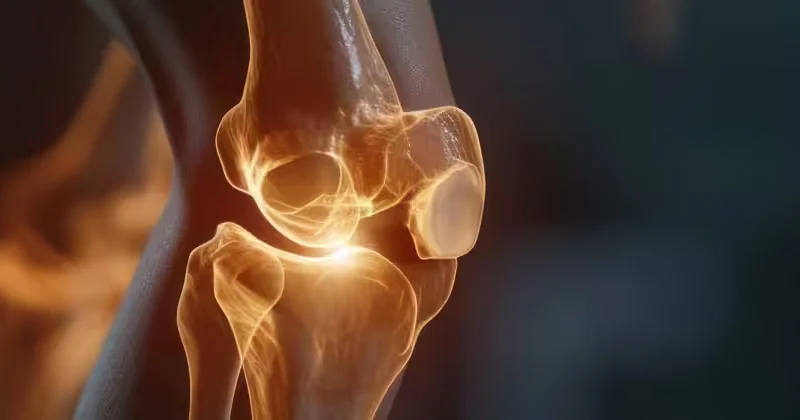
What is knee osteotomy?
The term “osteotomy” literally means cutting of the bone. In the knee, osteotomy is an operation in which the surgeon cuts and reshapes, in a controlled manner, one of the bones of the joint —usually the tibia (high tibial osteotomy) or, more rarely, the femur— in order to correct the alignment of the limb.
The aim is to shift body weight from the worn, painful compartment of the knee to the healthy compartment. In this way, the worn part is “relieved”, pain subsides and the progression of wear slows down. In other words, it is a “redistribution” of loads within the joint.
The reasoning is simple: when the knee has a deformity —varus (the legs “lean” inwards, forming an “O”) or valgus (the legs form an “X”)— weight is distributed unevenly, overloading one compartment. Osteotomy corrects this uneven distribution.
The axis of the limb and its importance
To understand why osteotomy is so effective, we need to look at how loads are distributed in the knee. In a normal limb, the “mechanical axis” —an imaginary line joining the centre of the hip to the centre of the ankle— passes approximately through the centre of the knee, so that weight is distributed evenly between the medial and the lateral compartment.
When there is a deformity, this balance is disturbed. In varus (“bow legs”, an “O” shape), the axis shifts medially, overloading the medial compartment. In valgus (an “X” shape), the opposite occurs, with overloading of the lateral compartment. This chronic, uneven loading “wears out” the overloaded compartment much faster.
Osteotomy corrects precisely this uneven distribution: by moving the axis to the correct position, it “unloads” the affected compartment and transfers the weight to the healthy one. This is a profound biomechanical rationale, which explains why an operation on the bone —and not on the joint itself— can relieve pain so effectively.
When is osteotomy indicated?
Knee osteotomy is a specialised operation with specific indications. The ideal candidate is as a rule:
- A younger, active patient (usually under 60-65 years of age), for whom knee replacement would mean a possible need for revision in the future because of wear.
- A patient with arthritis confined to a single compartment of the knee (usually the medial).
- A patient with deformity of the axis (varus or valgus) that overloads the affected compartment.
- A patient with a good range of motion and joint stability.
Osteotomy can also be combined with other joint-preserving procedures, such as cartilage or meniscus repair. Conversely, it is not indicated in patients with diffuse arthritis, inflammatory diseases, significant stiffness or advanced age, where knee replacement is the most appropriate solution.
Advantages of the method
The main advantage of osteotomy is the preservation of the patient’s natural joint. Unlike knee replacement, no artificial prosthesis is implanted, with the result that:
- The patient keeps their own knee and its normal kinematics.
- They can return to higher-intensity activities, without the restrictions that accompany a prosthesis.
- The need for knee replacement is delayed —or even avoided— gaining valuable years.
- If knee replacement is needed later, it remains entirely feasible.
It is therefore a particularly valuable strategy for younger patients, who have many years of active life ahead of them.
Diagnosis and pre-operative planning
The success of osteotomy depends decisively on precise pre-operative planning. The work-up includes a detailed clinical examination, weight-bearing radiographs —including special radiographs of the whole limb for accurate measurement of the axis— and, where necessary, MRI to assess the condition of the cartilage and the menisci.
On the basis of these measurements, the surgeon calculates precisely the degree of correction required so that the mechanical axis of the limb is moved to the correct position. This precise planning is what determines, to a large extent, the final result.
How the operation is performed
Knee osteotomy is performed under general or spinal anaesthesia. In its most common form —the “opening-wedge” high tibial osteotomy— the surgeon makes a controlled cut in the upper part of the tibia and carefully “opens” a wedge, correcting the axis by the pre-calculated number of degrees. The gap created is stabilised with a special metal plate and screws and, where necessary, with a bone graft or bone substitute.
Modern technology —with the use of digital planning and, in some cases, customised guides— allows the correction to be achieved with great accuracy. After fixation, the bone heals progressively in its new, corrected position.
Post-operative course and rehabilitation
Recovery after osteotomy requires patience, as it involves bone healing. In the first weeks, weight-bearing on the limb is protected, with the use of walking aids, to allow the bone to unite in its new position. The exact timing and the degree of weight-bearing permitted are determined by the surgeon, according to the type of osteotomy and the progress of healing.
At the same time, a physiotherapy programme begins to maintain range of motion, strengthen the muscles and, gradually, restore a normal gait. Complete bone healing and return to more demanding activities usually take several months. Consistency with the rehabilitation programme is decisive for an excellent result.
Symptoms and indications that lead to the decision
Patients who end up being candidates for osteotomy as a rule present a characteristic picture: pain localised to one side of the knee (usually the medial), which worsens with weight-bearing, walking longer distances and sporting activities. There is often also a visible deformity of the limb —”bow legs” or an “X” shape— which may have worsened over the years.
The distinctive feature of these patients is that, despite the localised wear, they retain a good range of motion and stability, while the rest of the joint remains in good condition. It is precisely this picture —localised wear with an otherwise healthy joint in a younger, active patient— that makes osteotomy an ideal choice, as it allows the problem to be corrected without sacrificing the natural joint.
Possible complications
Knee osteotomy is a safe and established operation; however, like any surgical procedure, it carries certain rare risks: infection, thrombosis, delayed union or, more rarely, non-union of the bone, as well as incomplete correction of the axis. Meticulous surgical technique, precise planning and proper rehabilitation minimise these risks.
Osteotomy or knee replacement?
The choice between osteotomy and knee replacement depends mainly on age, activity level, the extent of the arthritis and the presence of axis deformity. In general, osteotomy is preferred in younger, active patients with localised, unicompartmental arthritis and axis deformity, where preserving the natural joint is a priority.
Knee replacement, on the other hand, is indicated in older patients or in diffuse arthritis. The two methods are not competing but complementary: osteotomy can “buy time”, postponing the need for knee replacement by many years. The right choice is always made on an individual basis, by an experienced surgeon.
Types of knee osteotomy
Depending on the site of the deformity and the compartment that needs to be unloaded, different types of osteotomy are used:
- High tibial osteotomy: The most common form, performed in the upper part of the tibia. It is indicated mainly for the correction of varus and the unloading of the medial compartment. It may be “opening-wedge” (where the surgeon opens a wedge and stabilises it) or “closing-wedge” (where a wedge of bone is removed).
- Femoral osteotomy: Performed in the lower part of the femur, mainly for the correction of valgus and the unloading of the lateral compartment.
The choice of the appropriate type and of the exact technique is individualised on the basis of pre-operative planning and the characteristics of the deformity.
Return to activities
One of the main advantages of osteotomy —compared with knee replacement— is that it allows a return to higher-intensity activities, as the natural joint is preserved without the restrictions of a prosthesis. After complete bone healing and completion of rehabilitation, many patients return even to sporting activities.
This makes osteotomy a particularly attractive option for younger, active people who do not wish to limit their lifestyle but are also not yet suitable candidates —because of age and activity— for knee replacement.
Cost of knee osteotomy
The cost of knee osteotomy depends on the type of operation, the materials to be used (plates, screws, any grafts), the hospital and room category, the length of stay, and the patient’s insurance cover. In most cases, private insurance policies and insurance funds cover a significant part of the expense.
Precise information on cost is always provided on an individual basis, after the clinical examination and once the treatment plan has been defined. The practice is at your disposal for any relevant information.
More on the factors that determine the cost and on cover by insurance funds: Cost of surgery.
The role of physiotherapy
Physiotherapy is an integral part of rehabilitation after osteotomy. The programme is designed to respect the stages of bone healing: at first it focuses on controlling swelling, maintaining range of motion and gentle muscle activation, without stressing the osteotomy site.
As bone union progresses, the programme evolves into progressive muscle strengthening, gait retraining with the now corrected axis, and gradual return to activities. Proper, guided rehabilitation is just as important as the operation itself for the final result.
Frequently asked questions
What exactly does osteotomy correct?
It corrects the axis of the limb, shifting the weight from the worn, painful compartment of the knee to the healthy one. This relieves the affected part and slows down wear.
Who are suitable candidates?
Mainly younger, active patients with arthritis confined to one compartment and axis deformity (varus or valgus), with a good range of motion.
Will I keep my natural knee?
Yes. This is the main advantage of osteotomy: no artificial prosthesis is implanted, so the natural joint and its normal kinematics are preserved.
How long does recovery take?
Recovery requires patience, as it involves bone healing. Protected weight-bearing lasts for weeks, while complete healing and return to demanding activities take several months.
Can I have a knee replacement later?
Yes. Osteotomy does not rule out a future knee replacement — on the contrary, it “buys time”, postponing the need for it by many years.
Is the cost covered by insurance?
In most cases, private insurance policies and insurance funds cover part or all of the expense. The practice can give you detailed information.
Is recovery painful?
Post-operative pain is controlled effectively with modern analgesic protocols. The main challenge of recovery is not pain but the patience required by bone healing and protected weight-bearing.
Will the hardware (plate, screws) stay in permanently?
In many cases the hardware remains in place without any problem. Its removal is considered on an individual basis, if it causes discomfort, after the bone has fully united.
How long does the result of osteotomy last?
The result of a successful osteotomy can last for many years, significantly postponing the need for knee replacement. The exact duration depends on the progression of the arthritis, body weight and activity level.
Is it suitable for elderly patients?
Osteotomy is preferred mainly in younger, active patients. At older ages or in diffuse arthritis, knee replacement is usually the most appropriate solution.
Contact
Book an appointment with Dr. Tsarouhas
Fill in the form with the time that suits you and we will contact you, or call us directly.
Call us 210 6464 744-
Petroupoli 1 Agias Triados St., 132 31 210 5011 717
-
Heraklion, Crete 49 Kyrillou Loukareos St., 712 01
Appointment request
We reply to every request on the same or the next working day.
Your details are used solely to contact you.