
Surgical technique
Hip Arthroscopy
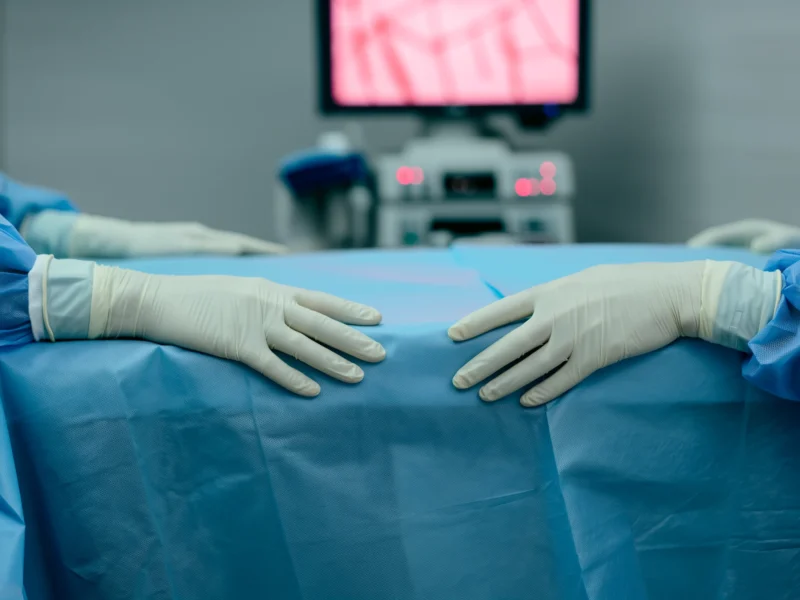
Hip arthroscopy is a minimally invasive procedure in which a camera and fine instruments are introduced into the joint through two or three incisions of a few millimetres. It allows direct inspection of the hip and the treatment of lesions that previously required open surgery.
When hip arthroscopy is indicated
The main indications are femoroacetabular impingement (FAI), where abnormal morphology of the femoral head or the acetabulum causes impingement at the extremes of movement, tears of the acetabular labrum, cartilage lesions, loose bodies within the joint, synovitis and inflammation of the synovial membrane, as well as certain cases of iliopsoas tendinopathy or extra-articular impingement.
When it is NOT indicated
Arthroscopy does not treat established hip osteoarthritis. When the joint space has already narrowed significantly, the results are poor and short-lived, and the right solution is hip arthroplasty. The same applies to advanced dysplasia or extensive avascular necrosis. Selecting the right patient is the most important factor for success.
How the operation is performed
The operation is performed under general or spinal anaesthesia. The patient is placed on a special operating table and controlled traction is applied, in order to open up the central compartment of the joint. Under image intensification the portals are established, a systematic inspection is carried out and then the therapeutic procedure follows: repair or reconstruction of the labrum, osteoplasty to remove the bony prominence in impingement, microfracture or modern cartilage repair techniques. The duration is usually 60 to 120 minutes.
Rehabilitation
The operation is usually performed as a day case or with a one-night hospital stay. This is followed by partial weight-bearing with crutches for two to four weeks, depending on what was done inside the joint. Physiotherapy starts immediately, with emphasis on range of motion and on avoiding iliopsoas spasm. Return to desk work takes place at two to three weeks, to running at three to four months and to competitive sport at four to six months.
Complications
Hip arthroscopy is safe, but not without risks. Those described include transient traction-related neurapraxia, mainly of the pudendal or the lateral femoral cutaneous nerve, fluid extravasation into the soft tissues, heterotopic ossification, infection and thrombosis. Most are rare and transient when the operation is performed by an experienced surgeon with an appropriate traction time.
Cost of hip arthroscopy
There is no single price. The cost depends on exactly what will be done inside the joint and on the suture materials that will be needed, on the hospital and type of room, on the anaesthesia and length of stay, as well as on your insurance cover. An accurate estimate is given after the clinical examination and assessment of the MRI. Contact us for an appointment.
More on the factors that determine the cost and on cover by insurance funds: Cost of surgery.
Contact
Book an appointment with Dr. Tsarouhas
Fill in the form with the time that suits you and we will contact you, or call us directly.
Call us 210 6464 744-
Petroupoli 1 Agias Triados St., 132 31 210 5011 717
-
Heraklion, Crete 49 Kyrillou Loukareos St., 712 01
Appointment request
We reply to every request on the same or the next working day.
Your details are used solely to contact you.