
Orthopedic condition
Rotator Cuff Tears
Rotator cuff tears are one of the most common causes of shoulder pain and dysfunction, particularly in middle-aged and older people, but also in athletes. The rotator cuff is crucial for the movement and stability of the shoulder, and a tear can seriously affect the function of the upper limb.
Dr. Ioannis Tsarouhas, Orthopedic Surgeon with experience in arthroscopic shoulder surgery and sports injuries, treats rotator cuff tears on an individual basis, with the aim of relieving pain and restoring function.
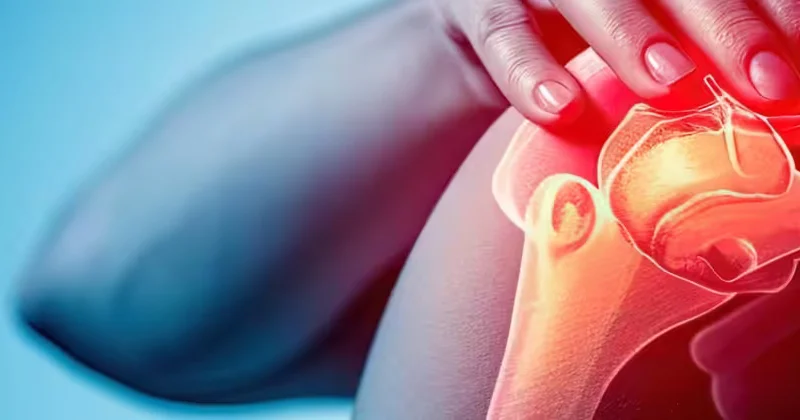
What is the rotator cuff?
The rotator cuff is a complex of four muscles and their tendons (supraspinatus, infraspinatus, subscapularis and teres minor) that surround the head of the humerus. Its role is twofold: it moves the shoulder (particularly when lifting and rotating the arm) and it stabilises the head of the humerus within the glenoid during movement.
When one or more of these tendons is torn – partially or completely – this function is disrupted, causing pain, weakness and restricted movement. The most commonly affected tendon is the supraspinatus.
Causes and types of tear
Depending on their cause, rotator cuff tears fall into two main categories:
- Degenerative tear: The most common form, which develops gradually with age as the tendons wear and weaken. Repetitive strain (occupational or sporting, particularly in overhead movements) and the reduced blood supply of the tendons contribute to this wear.
- Traumatic tear: Caused by an acute injury – a fall, a sudden pull or a dislocation – and can also occur in younger patients.
Tears are also classified as partial-thickness or full-thickness, as well as by their size and the number of tendons involved – factors that affect treatment.
The four tendons of the rotator cuff
To understand a tear, it is worth looking at the structure of the rotator cuff in more detail. It is formed by the tendons of four muscles, each with its own role:
- Supraspinatus: The most commonly affected. It initiates lifting of the arm to the side and holds the head of the humerus in place.
- Infraspinatus: Mainly responsible for external rotation of the arm.
- Subscapularis: Responsible for internal rotation.
- Teres minor: Also contributes to external rotation.
Together, these four tendons form a “cuff” around the head of the humerus, providing both movement and stability. A tear – depending on the tendon and its extent – disturbs this delicate balance, resulting in pain and functional deficit. Accurate identification of the affected tendon and the size of the tear, through clinical examination and magnetic resonance imaging (MRI), is what guides the treatment decision.
Clinical presentation – Symptoms
The symptoms of a rotator cuff tear include:
- Pain in the shoulder, often felt on the side of the upper arm and made worse by lifting the arm.
- Night pain, characteristic of the condition, which disturbs sleep, particularly when the patient lies on the affected side.
- Weakness of the upper limb – difficulty lifting the arm or performing overhead activities.
- Restricted movement and difficulty with everyday activities, such as combing your hair or getting dressed.
- A “clicking” sensation during movement.
Diagnosis
Diagnosis is based on the history, the clinical examination with special tests that assess the strength and integrity of each tendon, and imaging studies. X-rays rule out other bony pathology. Ultrasound can show the tear in real time. Magnetic resonance imaging (MRI) is the examination of choice, as it accurately shows the type, size and location of the tear, as well as any associated lesions.
Treatment
Treatment is tailored to the type and size of the tear and to the patient’s age, level of activity and demands.
Conservative treatment
In partial tears, in degenerative tears in older patients with low functional demands, or as an initial approach, treatment can be conservative. It includes activity modification, anti-inflammatory medication, targeted physiotherapy to strengthen the remaining muscles that support the shoulder and, in selected cases, local injections. Conservative treatment does not “repair” the tear, but it can relieve the symptoms significantly.
Surgical treatment
In full-thickness tears, in traumatic tears in younger, active patients, or when conservative treatment fails, surgical repair is indicated. The operation – as a rule arthroscopic – consists of suturing the tendon back in place using special anchors. The aim is to restore the anatomy and function of the rotator cuff. In very extensive, chronic tears that cannot be repaired, alternative techniques may be required.
Why timely treatment matters
A rotator cuff tear that is left untreated tends to enlarge over time, as the tension at the edges of the tear and the degeneration continue. A small, repairable tear can gradually progress to a large, irreparable tear, with the tendons “retracting” and the muscles wasting. In advanced cases, a chronic tear can lead to a particular form of arthritis (rotator cuff arthropathy). This is why timely assessment matters, particularly in traumatic tears.
Cost of treatment
The cost depends on the type of treatment (conservative or surgical), the size of the tear and the complexity of the repair, the materials (anchors), the hospital and the class of room, as well as insurance cover. In most cases of surgical treatment, private insurance policies and insurance funds cover a significant part of the expense.
Precise information is given on an individual basis, after the clinical assessment. The clinic is at your disposal for any relevant information.
More about the factors that determine the cost and about cover by insurance funds: Cost of surgery.
The role of physiotherapy in rehabilitation
Physiotherapy is of central importance both in conservative treatment and after surgical repair. In the conservative approach, it aims to strengthen the muscles that support the shoulder, so as to compensate – as far as possible – for the function of the affected tendon.
After rotator cuff repair, rehabilitation is a particularly careful process: the repaired tendon needs time to heal, which is why the shoulder is initially protected (often with a sling / shoulder immobiliser) and movements are introduced gradually. Loading the shoulder too early can put the repair at risk. Faithful adherence to the gradual programme is therefore decisive for a successful outcome.
Frequently asked questions
Does a rotator cuff tear heal on its own?
No. A full-thickness tendon tear does not heal on its own. Physiotherapy can relieve the symptoms by strengthening the remaining muscles, but it does not “cure” the tear. Surgical repair is required to restore the tendon.
Is surgery always necessary?
No. Partial tears and degenerative tears in patients with low demands are often treated conservatively. Surgery is indicated mainly for full-thickness or traumatic tears in active patients.
Why does it hurt at night?
Night pain is characteristic of a rotator cuff tear and gets worse when the patient sleeps on the affected side or with the arm in certain positions.
How long does recovery take after the repair?
Recovery after rotator cuff repair is gradual and careful, with protection of the repair (often with a sling) and structured physiotherapy, and it usually takes several months for a full return to activity.
Is the cost covered by insurance?
In most cases of surgical treatment, private insurance policies and insurance funds cover part or all of the expense. The clinic can give you detailed information.
What is the difference between a partial and a full-thickness tear?
In a partial tear, the tendon is damaged but not completely severed, whereas in a full-thickness tear it has torn through its entire thickness. Partial tears are often treated conservatively, while full-thickness tears – particularly in active patients – often need repair.
Can I lift my arm with a rotator cuff tear?
It depends on the size and location of the tear. With small tears, the patient can lift the arm, but with pain. With large tears, there may be significant weakness in lifting the arm.
Contact
Book an appointment with Dr. Tsarouhas
Fill in the form with the time that suits you and we will contact you, or call us directly.
Call us 210 6464 744-
Petroupoli 1 Agias Triados St., 132 31 210 5011 717
-
Heraklion, Crete 49 Kyrillou Loukareos St., 712 01
Appointment request
We reply to every request on the same or the next working day.
Your details are used solely to contact you.