
Orthopedic condition
Knee Cartilage Lesions
Cartilage lesions of the knee are injuries to, or wear of, the articular cartilage, the smooth tissue that covers the surfaces of the bones in the joint. Because cartilage has a limited capacity to heal itself, these lesions — if left untreated — can progress to osteoarthritis, particularly in younger and active patients.
Dr. Ioannis Tsarouhas, Orthopedic Surgeon specialising in arthroscopic knee surgery and joint-preserving surgery, treats cartilage lesions with modern techniques, with the aim of protecting the joint and relieving the patient’s symptoms.
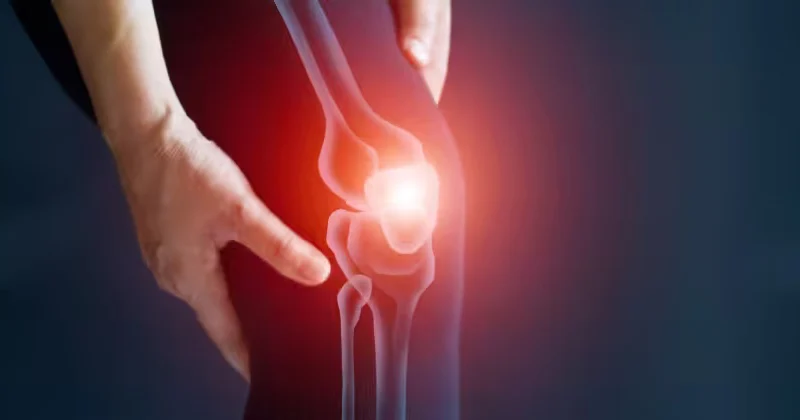
What is articular cartilage?
Articular cartilage is a specialised, smooth and resilient tissue that covers the surfaces of the bones inside the joint. Its function is twofold: it allows the bones to glide smoothly, almost without friction, during movement, and it absorbs the shocks to which the joint is subjected.
The distinctive feature of articular cartilage — and the reason why damage to it is so important — is that it has no blood supply of its own. Without a blood supply, cartilage has very little capacity to heal on its own after damage. As a result, a cartilage lesion tends to persist or even to enlarge over time if it is not treated.
Why cartilage does not heal easily
The key to understanding cartilage lesions lies in the unique nature of articular cartilage. Most tissues of the body — such as skin, muscle or bone — have a rich blood supply, which allows them to heal after damage by bringing cells and nutrients to the area.
Articular cartilage, by contrast, is one of the very few tissues that have no blood vessels at all. It is nourished indirectly, through the joint fluid. This peculiarity, although it allows the cartilage to function smoothly and without friction, has a serious drawback: when cartilage is injured, it cannot “call in” repair cells in order to heal. The lesion therefore persists and, under constant mechanical stress, tends to enlarge. It is precisely this inability to heal itself that makes modern surgical techniques important.
Causes of cartilage lesions
Cartilage lesions of the knee can have various causes:
- Injury: An injury, a blow or a twisting movement can detach or damage a piece of cartilage. It often coexists with other injuries, such as a meniscus tear or a cruciate ligament tear.
- Repetitive strain: Chronic overloading, particularly in athletes, can cause gradual wear of the cartilage.
- Malalignment: Varus or valgus deformity of the knee leads to uneven loading and localised wear of the cartilage.
- Osteochondritis: A condition in which a segment of bone and of the overlying cartilage loses its blood supply.
- Degeneration: The normal wear that comes with age, which in the early stages appears as a localised cartilage lesion before progressing to diffuse arthritis.
Clinical presentation – Symptoms
The symptoms of cartilage lesions can resemble those of other knee conditions, which makes a correct diagnosis important. The most common are:
- Pain in the knee, which worsens with activity and weight-bearing.
- Swelling (oedema), particularly after activity.
- Mechanical symptoms: a sensation of “catching”, grating or, when there is a loose fragment of cartilage, “locking” of the knee.
- Stiffness and a reduced range of motion.
In some cases, particularly in the early stages, the lesion may be asymptomatic and be discovered incidentally during the investigation of another condition.
Diagnosis
The diagnosis of cartilage lesions requires a specialised approach. It begins with the history and clinical examination and continues with imaging. MRI is the key investigation, as it visualises the cartilage and shows the extent, depth and location of the lesion, as well as any associated injuries.
X-rays help to assess the alignment of the limb and to exclude advanced arthritis. In some cases, the definitive assessment of the lesion — its depth and stability — is made during arthroscopy, by direct visual inspection.
Treatment
The treatment of cartilage lesions is individualised according to the size, depth and location of the lesion, the patient’s age and activity level, and the presence of associated problems (such as malalignment).
Conservative treatment
In small or asymptomatic lesions, treatment can be conservative, with activity modification, physiotherapy to strengthen the muscles, weight control and, in selected cases, injection therapies.
Surgical treatment
When the lesion is symptomatic or extensive, surgical — as a rule arthroscopic — treatment is indicated. Depending on the characteristics of the lesion, the surgeon chooses the appropriate technique:
- Chondroplasty / smoothing: removal of the unstable, worn parts of the cartilage.
- Micro-drilling: creation of small channels in the underlying bone, so that repair cells are drawn in from the bone marrow and new tissue forms to cover the lesion.
- Cartilage transplantation techniques (such as the transfer of osteochondral grafts or chondrocyte transplantation), for larger or deeper lesions in selected patients.
When malalignment coexists, a combination with an osteotomy may be required, in order to offload the area of the lesion and protect the result.
Recovery
Recovery after treatment of a cartilage lesion depends on the technique that was used. Cartilage repair techniques require, as a rule, protected weight-bearing for a period of weeks, in order to protect the new tissue that is forming, as well as a careful, gradual physiotherapy programme.
The programme focuses on maintaining range of motion, muscle strengthening and a gradual return to weight-bearing and activity. Patience and consistency are particularly important here, as the maturation of the new cartilage tissue is a slow process.
Why timely treatment matters
Because articular cartilage does not heal on its own, a cartilage lesion that is left untreated tends to enlarge. The localised lesion can gradually progress to diffuse wear and, ultimately, to osteoarthritis — an irreversible condition.
Early diagnosis and treatment, particularly in younger patients, can halt this progression, relieve the symptoms and protect the joint in the long term. This is why persistent knee pain in young, active patients should not be ignored.
Combination with correction of alignment
An important element in the treatment of cartilage lesions is recognising and correcting the underlying causes. When a cartilage lesion is caused — or made worse — by malalignment of the limb (varus or valgus), simply repairing the lesion is not enough: the underlying uneven loading will continue to strain the area.
In these cases, combining cartilage repair with an osteotomy — which corrects the alignment and offloads the area of the lesion — offers much better and more lasting results. This comprehensive approach, which addresses both the lesion and its cause, is characteristic of modern joint-preserving surgery.
The importance of specialisation
The treatment of cartilage lesions is one of the most demanding fields of knee surgery. Correct assessment of the lesion, the choice of the appropriate technique among the many available, and the possible need to combine it with other procedures all require experience and specialised knowledge.
Correct patient selection is equally important: not every cartilage lesion needs — or will benefit from — surgical treatment. The role of the specialised surgeon is to recognise which patient will truly benefit and which technique is the most suitable for the particular lesion.
Grades of severity of cartilage lesions
Cartilage lesions are not all the same — they are graded according to their depth and extent. Broadly speaking, they range from the mildest (superficial softening or fibrillation of the cartilage) to the most severe (lesions that extend through the full thickness of the cartilage, exposing the underlying bone).
This grading has direct practical significance: mild lesions are often treated conservatively or with simple smoothing, whereas full-thickness lesions require more complex repair techniques, such as micro-drilling or transplantation. It is the accurate assessment of the grade of the lesion — by MRI and, ultimately, by direct arthroscopic inspection — that determines the appropriate treatment strategy.
Cost of treating cartilage lesions
The cost depends on the type and complexity of the procedure, the materials that may be used, the possible need to combine it with another operation, the hospital and the class of room, as well as the patient’s insurance cover. In most cases, private insurance policies and insurance funds cover a significant part of the expense.
Precise information is given on an individual basis, after the clinical assessment. The practice is at your disposal for any relevant information.
More on the factors that determine the cost and on cover by insurance funds: Cost of surgery.
The role of physiotherapy
Physiotherapy is an integral part of the treatment of cartilage lesions, in both the conservative and the surgical approach. In conservative management, it focuses on strengthening the muscles that offload the joint and on improving function.
After surgical cartilage repair, the programme is particularly cautious: the new tissue that is forming needs protection, which is why weight-bearing is limited at first and increased gradually as the tissue matures. Patience and close cooperation with the physiotherapist and the surgeon are decisive, as the maturation of cartilage tissue is a slow process that should not be rushed.
Frequently asked questions
Does articular cartilage heal on its own?
No. Articular cartilage has no blood supply of its own and very little capacity to heal itself. This is why cartilage lesions tend to persist or enlarge if they are not treated.
Do cartilage lesions lead to arthritis?
If left untreated, they can progress from a localised lesion to diffuse wear and, ultimately, to osteoarthritis. Timely treatment can halt this progression.
How are they diagnosed?
Mainly with MRI, which visualises the cartilage and the extent of the lesion. The definitive assessment is sometimes made during arthroscopy, by direct visual inspection.
What are the surgical options?
Depending on the lesion: smoothing, micro-drilling (which stimulates the formation of new tissue) or cartilage transplantation techniques. When there is malalignment, they may be combined with an osteotomy.
How long does recovery take?
Cartilage repair techniques require protected weight-bearing for weeks and a careful, gradual programme, as the maturation of the new tissue is a slow process.
Is the cost covered by insurance?
In most cases, private insurance policies and insurance funds cover part or all of the expense. The practice can give you detailed information.
Are cartilage lesions the same as arthritis?
Not exactly. A cartilage lesion is a localised area of cartilage damage, whereas osteoarthritis is diffuse, extensive wear. However, a cartilage lesion that is left untreated can progress to arthritis.
Which patients benefit most from surgical repair?
Mainly younger, active patients with localised lesions, in whom timely treatment can protect the joint from progressing to diffuse wear.
Is a cartilage lesion always painful?
No. Some lesions, particularly in the early stages, may be asymptomatic and be discovered incidentally. When they do cause pain, swelling or mechanical symptoms, however, they need to be assessed.
Can cartilage be “rebuilt”?
Natural articular cartilage does not regenerate fully. Modern techniques aim to create new tissue that covers the lesion and improves function, without, however, reproducing an exact copy of the original cartilage.
Contact
Book an appointment with Dr. Tsarouhas
Fill in the form with the time that suits you and we will contact you, or call us directly.
Call us 210 6464 744-
Petroupoli 1 Agias Triados St., 132 31 210 5011 717
-
Heraklion, Crete 49 Kyrillou Loukareos St., 712 01
Appointment request
We reply to every request on the same or the next working day.
Your details are used solely to contact you.