
Orthopedic condition
Morton’s Neuroma
Morton’s neuroma is a painful condition of the forefoot caused by irritation and thickening of the common plantar digital nerve, most often between the third and fourth metatarsals. It is characterised by burning pain in the forefoot, which may radiate to the toes and be accompanied by numbness or pins and needles. It is a common cause of metatarsalgia and usually worsens with walking and wearing narrow shoes.
Dr. Ioannis Tsarouhas, Orthopedic Surgeon with a clinical interest in conditions of the foot, treats Morton’s neuroma on an individual basis, from conservative management to surgical treatment when needed.
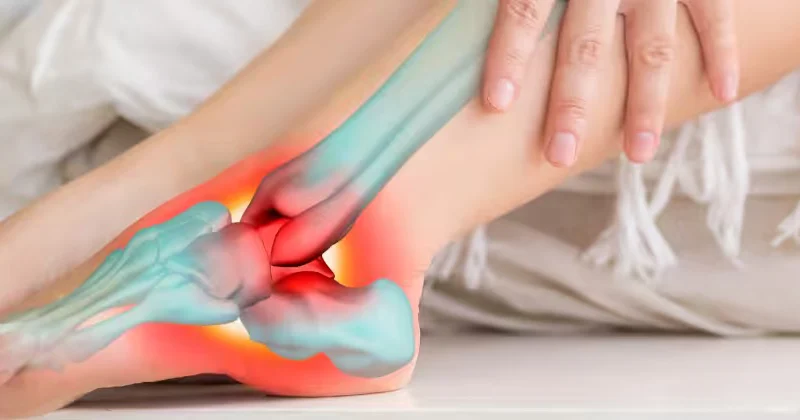
What is Morton's neuroma?
Despite its name, Morton’s neuroma is not a true neoplasm, but rather perineural fibrosis and thickening of the tissue around a common plantar digital nerve, as a result of chronic mechanical irritation and compression.
It is most often located in the third interdigital space, between the third and fourth metatarsals, and less often in the second. Repeated compression of the nerve during walking, particularly in narrow shoes, causes characteristic burning pain, numbness and paraesthesiae that radiate towards the adjacent toes.
Causes and risk factors
Morton’s neuroma is associated with factors that increase pressure on, or irritation of, the plantar digital nerve:
- Unsuitable footwear: Narrow, pointed shoes and high heels “squeeze” the metatarsals together and compress the nerve – the most important aggravating factor.
- Female sex: The condition is clearly more common in women.
- Disorders of the static alignment of the foot and deformities (e.g. hallux valgus, dropped metatarsals).
- Repetitive strain on the forefoot (e.g. in runners or in activities involving jumping).
Clinical picture – Symptoms
The symptoms of Morton’s neuroma are characteristic:
- Burning, sharp pain in the forefoot, radiating towards the toes (usually the third and fourth).
- Numbness or tingling in the toes.
- A feeling that “there is a pebble” or a “fold in the sock” under the sole of the foot.
- Worsening with walking, especially in narrow shoes or high heels, and relief when the patient takes off the shoe and “massages” the sole.
A characteristic finding is Mulder’s sign: on compression of the forefoot, a “click” may be felt (and often heard), accompanied by reproduction of the pain.
Diagnosis
The diagnosis is largely clinical, based on the characteristic history, the location of the pain and specific tests (such as Mulder’s sign). Ultrasound is an excellent, non-invasive examination for confirming and measuring the neuroma. MRI is used in selected cases, especially when the diagnosis is unclear or to rule out other conditions of the forefoot.
Treatment
Treatment is stepwise, always starting with conservative measures.
Conservative treatment
- Suitable footwear: comfortable, wide at the front, with a low heel – the most basic measure.
- Orthotic insoles with metatarsal support: They “open up” the space between the metatarsals and offload the nerve.
- Activity modification and control of body weight.
- Anti-inflammatory medication to control pain.
- Local injections (of corticosteroids or other agents), which can provide significant relief.
Surgical treatment
When the symptoms persist and are severe, despite conservative treatment, surgical treatment is indicated. The operation usually consists of removal (excision) of the neuroma or, in selected cases, release of the nerve by dividing the ligament that compresses it. It is an operation with very good results in terms of pain relief.
Why proper treatment matters
Morton’s neuroma, although benign, can cause significant, chronic pain that limits quality of life and activity. Timely treatment – starting with simple measures, such as a change of footwear and orthotic insoles – can in many cases relieve the patient without the need for surgery. The correct diagnosis is also important, as pain in the forefoot may also be due to other conditions, which are treated differently.
The importance of footwear
In Morton’s neuroma, footwear plays a central – not merely supportive – role. The mechanism of the condition is compression of the nerve between the metatarsal heads, and narrow, pointed shoes, as well as high heels, directly intensify this compression.
Switching to comfortable shoes that are wide at the front, with a low heel and a soft sole, reduces the pressure on the nerve and, in many cases, provides significant relief on its own. Combined with orthotic insoles – which “open up” the space between the metatarsals – suitable footwear is the basis of conservative treatment and, often, the key to avoiding surgery.
Cost of treatment
The cost depends on the type of treatment (orthotic insoles, injections or surgery) and the insurance cover. Precise information is provided on an individual basis, after the clinical assessment. The clinic is at your disposal for any relevant information.
More on the factors that determine the cost and on cover by insurance funds: Cost of surgery.
When to see a doctor
Persistent burning pain in the forefoot, numbness in the toes or the characteristic feeling that “there is a pebble” under the sole of the foot, especially when they worsen in narrow shoes, should be evaluated by a specialised doctor. Timely assessment allows simple, conservative measures to be started which, in many cases, relieve the patient without the need for surgery.
Equally important is the correct differential diagnosis: pain in the forefoot may also be due to other conditions – such as dropped metatarsals or a stress fracture – each of which is treated differently. Specialised evaluation ensures the correct diagnosis and the appropriate treatment plan.
Frequently asked questions
Is Morton's neuroma a tumour?
No. Despite its name, it is not a true tumour or cancer, but a benign thickening of the tissue around a nerve in the sole of the foot, due to chronic irritation and compression.
Where exactly does it hurt?
The pain is located in the forefoot and radiates towards the toes, most commonly between the third and fourth toes. The feeling of “walking on a pebble” or on a fold in the sock is characteristic.
Do the right shoes help?
Yes, decisively. Comfortable, wide shoes with a low heel reduce compression of the nerve. Combined with orthotic insoles, they are the basis of conservative treatment.
Is surgery always needed?
No. Many cases are relieved by conservative measures (footwear, orthotic insoles, injections). Surgery is reserved for severe, persistent cases that do not respond.
Is the cost covered by insurance?
Cover depends on the type of treatment and the insurance policy. The clinic can give you detailed information.
Can it occur in more than one place?
Yes, although more rarely. Morton’s neuroma occurs most often between the third and fourth toes, but it can also affect other interdigital spaces or – rarely – both feet.
Can it be cured permanently?
Yes. In most cases the symptoms are controlled by conservative means, while in resistant cases surgical removal of the neuroma offers definitive pain relief, with very good results.
Contact
Book an appointment with Dr. Tsarouhas
Fill in the form with the time that suits you and we will contact you, or call us directly.
Call us 210 6464 744-
Petroupoli 1 Agias Triados St., 132 31 210 5011 717
-
Heraklion, Crete 49 Kyrillou Loukareos St., 712 01
Appointment request
We reply to every request on the same or the next working day.
Your details are used solely to contact you.