
Surgical technique
Shoulder Arthroplasty
Shoulder arthroplasty is the surgical procedure in which the worn articular surfaces of the shoulder are replaced with prosthetic ones, with the aim of eliminating pain and restoring function. It is one of the most successful operations for advanced arthritis and certain serious conditions of the shoulder.
Dr. Ioannis Tsarouhas, Orthopedic Surgeon with extensive experience in arthroplasty of the major joints, treats conditions of the shoulder with modern techniques, selecting the appropriate form of arthroplasty on an individualised basis.
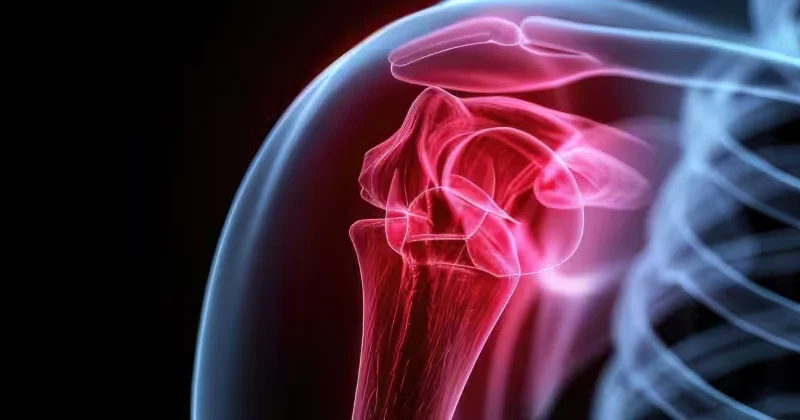
What is shoulder arthroplasty?
The shoulder is a ball-and-socket joint, in which the humeral head articulates with the glenoid of the scapula. In arthroplasty, these worn surfaces are replaced with prostheses: a metal stem with a spherical head for the humerus and, depending on the type, a corresponding component for the glenoid.
The aim of the operation is to eliminate the pain caused by friction between the worn surfaces and to restore smooth, pain-free motion. Modern implants are made of high-strength, biocompatible materials.
Types of shoulder arthroplasty
There are different types of shoulder arthroplasty, and the choice between them depends mostly on the condition of the rotator cuff (the tendons that move and stabilise the shoulder) and the characteristics of each case:
- Anatomic total arthroplasty: Both the humeral head and the glenoid are replaced, with prostheses that “mimic” the normal anatomy. It is indicated when the rotator cuff is in good condition.
- Reverse arthroplasty: Here the normal “geometry” is reversed — the ball is placed on the glenoid side and the socket on the humeral side. It is indicated when the rotator cuff is damaged or deficient, as it allows the deltoid muscle to take over the movement of the shoulder.
- Hemiarthroplasty: Only the humeral head is replaced, in select cases (e.g. certain fractures).
The choice of the appropriate type is decisive for the success of the operation and is made on an individualised basis, after detailed assessment.
Indications
Shoulder arthroplasty is mainly indicated when the pain and the restriction of motion are severe and do not respond to conservative treatment. The main conditions that lead to arthroplasty are:
- Advanced osteoarthritis of the shoulder
- Rheumatoid arthritis
- Arthropathy due to a chronic, extensive rotator cuff tear
- Osteonecrosis of the humeral head
- Certain complex fractures of the humeral head, particularly in elderly patients
Before the operation
Preparation includes a full preoperative laboratory, cardiological and anaesthetic work-up, as well as detailed imaging (X-rays and, as a rule, CT and/or MRI) to assess the bony anatomy and the condition of the rotator cuff and to plan the implants precisely. The patient is fully informed about the procedure and the rehabilitation programme.
How the operation is performed
Shoulder arthroplasty is performed under general anaesthesia, often with the addition of a regional nerve block for pain management. The surgeon accesses the joint, removes the worn surfaces and places the implants with precision (the humeral stem with the head and, depending on the type, the glenoid component). Stability and range of motion are checked, and the wound is closed in a layered fashion. The operation demands great technical precision and experience.
Postoperative course and rehabilitation
After the operation, the shoulder is usually immobilised temporarily in a special sling (shoulder immobiliser), in order to protect healing. Rehabilitation is a gradual, organised process that requires patience and consistency.
The physiotherapy programme starts early, initially with gentle passive motion, and progresses gradually to active motion and strengthening. The pace depends on the type of arthroplasty and on each individual case. Full restoration of function usually takes several months, with most patients regaining pain-free and functional motion.
Why the choice of type matters
The choice between anatomic and reverse arthroplasty is perhaps the most critical decision in this operation, and it is based mainly on the condition of the rotator cuff. The reason is fundamental: anatomic arthroplasty “reproduces” the normal joint, but in order to work properly it needs a healthy rotator cuff to move and stabilise the prosthesis.
When the rotator cuff is damaged —as in a chronic, extensive tear— an anatomic arthroplasty will not function well. This is exactly where reverse arthroplasty comes in: by reversing the geometry, it allows the strong deltoid muscle to take over the elevation of the arm, bypassing the need for a functional rotator cuff. This innovation has dramatically expanded the possibilities for restoring the shoulder in patients who previously had no good solution.
Possible complications
Shoulder arthroplasty is a safe operation; however, like any surgical procedure, it carries certain rare risks: infection, thrombosis, injury to nerves or blood vessels, instability or dislocation of the prosthesis and, in the long term, loosening of the implants. Meticulous surgical technique, the correct choice of the type of arthroplasty and careful rehabilitation minimise these risks.
The role of rehabilitation in the final outcome
As with any arthroplasty, in the shoulder too the final outcome depends to a large extent not only on the operation itself, but also on the quality and consistency of the rehabilitation. Physiotherapy after shoulder arthroplasty is a carefully structured process that respects the stages of healing.
It begins with gentle, guided passive motion, in order to avoid stiffness without compromising healing, and progresses gradually to active motion and, finally, to strengthening. Patience and faithful adherence to the programme are decisive — a hurried or, conversely, an inadequate rehabilitation can undermine even a flawlessly performed operation.
Cost of shoulder arthroplasty
The cost depends on the type of arthroplasty (anatomic, reverse or hemiarthroplasty), the implant materials, the clinic and the class of room, the length of hospital stay, as well as the insurance cover. In most cases, private insurance policies and insurance funds cover a significant part of the expense.
Precise information is given on an individual basis, after the clinical assessment. The practice is at your disposal for any relevant information.
More on the factors that determine the cost and on cover by insurance funds: Cost of surgery.
Life after shoulder arthroplasty
Once rehabilitation is complete, the great majority of patients are free of chronic pain —including the distressing night pain— and have regained the function of the upper limb for activities of daily living. Patient satisfaction with shoulder arthroplasty is, as a rule, high.
Certain high-demand or strenuous activities may need to be adapted, in order to protect the longevity of the prosthesis. With the appropriate precautions, the new joint can provide pain-free function for many years.
Indications by type of arthroplasty
The choice of type is individualised according to the underlying condition and the state of the tissues. Anatomic total arthroplasty is mainly indicated in advanced osteoarthritis with a healthy rotator cuff. Reverse arthroplasty is indicated when the rotator cuff is damaged —as in arthropathy from a chronic tear— or in certain complex fractures in elderly patients. Hemiarthroplasty is reserved for select cases.
It is this individualised choice that explains why detailed preoperative assessment —with CT and/or MRI— is so important: it ensures that the right solution is chosen for the specific anatomy and condition of each patient.
Frequently asked questions
What is the difference between anatomic and reverse arthroplasty?
In anatomic arthroplasty, the prostheses mimic the normal anatomy, and it is indicated when the rotator cuff is healthy. In reverse arthroplasty, the geometry is reversed so that the deltoid muscle does the work — it is indicated when the rotator cuff is damaged.
When is shoulder arthroplasty needed?
When the pain and the restriction of motion are severe and do not respond to conservative treatment, mainly because of advanced arthritis, rotator cuff arthropathy, osteonecrosis or complex fractures.
Will I regain full motion?
Most patients regain pain-free and functional motion. The exact range depends on the type of arthroplasty, the condition before surgery and consistency with rehabilitation.
How long does rehabilitation take?
Rehabilitation is gradual and usually takes several months until full functional recovery. The use of a sling in the initial postoperative period and physiotherapy are important parts of it.
Is the cost covered by insurance?
In most cases, private insurance policies and insurance funds cover part or all of the expense. The practice can give you detailed information.
When can I use my arm normally again?
Functional use of the arm is restored gradually, over a period of weeks to months, depending on the type of arthroplasty and the progress of physiotherapy. Your doctor will guide you on when each activity is permitted.
Contact
Book an appointment with Dr. Tsarouhas
Fill in the form with the time that suits you and we will contact you, or call us directly.
Call us 210 6464 744-
Petroupoli 1 Agias Triados St., 132 31 210 5011 717
-
Heraklion, Crete 49 Kyrillou Loukareos St., 712 01
Appointment request
We reply to every request on the same or the next working day.
Your details are used solely to contact you.