
Surgical technique
Hip Arthroplasty – ASI Method
Total hip arthroplasty is one of the most commonly performed and most successful orthopedic procedures. Dr. Ioannis Tsarouhas is a lead instructor of the ASI (Anterior Supine Intermuscular) method — a modern, minimally invasive hip arthroplasty technique — while the Major Joints Clinic of the Athens Medical Center is a certified Zimmer Biomet training and reference centre for the method, the only one in Greece.
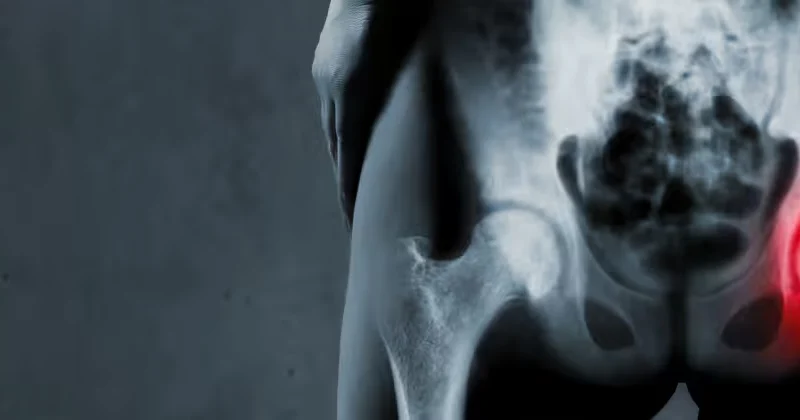
What is total hip arthroplasty?
Total hip arthroplasty consists of the replacement of the worn joint surfaces of both the acetabulum and the femoral head by their respective prostheses. Between them a liner (bearing surface) is interposed, which along with the prosthetic femoral head is designed to offer optimal tribological conditions for joint motion.
The first attempts at replacing the arthritic joint surfaces of the hip date back to the 1890s, while modern total hip arthroplasty is based on the principles of the “low friction arthroplasty” as described by Sir John Charnley in the 1960s. The most commonly used type involves a metal acetabular component with a plastic (polyethylene) or ceramic liner and a metal femoral stem with a metal or ceramic head. Nowadays, fixation of the components to bone is usually achieved without cement (press-fit), while fixation with bone cement is preferred in certain cases, such as highly osteoporotic bone.
The ASI method (Anterior Supine Intermuscular)
The ASI method is a modern, minimally invasive technique for total hip arthroplasty, whose main feature is reflected in its very name:
- Anterior: The joint is approached from the front of the hip.
- Supine: The patient lies on the back during the operation, which makes it easier to check leg length and implant positioning accurately.
- Intermuscular: The most important principle of the method. The surgeon passes between the muscles, following the natural anatomical “intervals”, without cutting them or detaching them from the bone.
It is precisely this principle — keeping the muscles intact — that gives the ASI method its advantages. As no muscle structures are damaged, the patient has less postoperative pain and faster mobilisation and recovery, while the risk of hip dislocation — a classic complication of arthroplasty — is significantly reduced.
Advantages of the ASI method
The minimally invasive, intermuscular approach of the ASI method offers a series of documented advantages:
- Muscle preservation: no muscles are cut, resulting in better and faster functional recovery.
- Faster mobilisation: patients get up and walk very soon after the operation.
- Less postoperative pain and a lower need for analgesics.
- Lower risk of dislocation, thanks to the preservation of the muscles and the capsule.
- More accurate restoration of leg length, thanks to the supine position.
- Smaller scar and a faster return to everyday life.
The method requires specialised training and experience. Dr. Tsarouhas, as lead instructor of the ASI method in Greece, applies the technique with extensive experience, both in primary arthroplasties and in revisions and selected fractures.
Total arthroplasty and hemiarthroplasty
There are two main categories of hip arthroplasty. In total arthroplasty, the joint surfaces of both the acetabulum and the femoral head are replaced by their respective prostheses, with the interposition of a liner that offers optimal tribological conditions. It is the procedure of choice for end-stage arthritis.
In hemiarthroplasty (partial hip replacement), only the femoral head is replaced — usually with a bipolar prosthetic head, which is composed of a small metallic head within a larger cup — while the articular surface of the acetabulum is preserved. The prosthetic head articulates directly with the native acetabulum. Hemiarthroplasty is mainly used for certain displaced femoral neck fractures in elderly patients.
The choice between the two, as well as the type of fixation (cemented or cementless) and the bearing surface materials (polyethylene, ceramic), are tailored to the age, bone quality and needs of each patient.
Indications for hip arthroplasty
The main indication for total hip arthroplasty is end-stage arthritis of the hip. Its aetiology may be:
- Primary (idiopathic) arthritis, with no known cause.
- Secondary arthritis, due to another condition, such as intracapsular hip fractures (femoral neck or subcapital fractures), certain femoral head or acetabular fractures, avascular necrosis of the femoral head, hip dysplasia, rheumatic or crystalline arthropathy, septic arthritis and neoplastic disorders.
In certain cases — particularly in some femoral neck fractures in elderly patients — hemiarthroplasty is used, in which only the femoral head is replaced (usually with a bipolar prosthetic head), while the acetabulum is preserved.
Preoperative evaluation and planning
Preoperative evaluation involves history-taking and clinical examination, as well as radiographs of the pelvis (preferably standing) and lateral radiographs of the hip. Basic laboratory examinations, an electrocardiogram, a chest radiograph and evaluation by an anaesthetist are also completed.
Of particular importance is the preoperative planning of the implants (templating): based on the radiographs, the surgical team calculates the size and orientation of the components, as well as the preoperative leg length discrepancy and how it will be restored. The patient is fully informed and signs the consent form.
How the operation is performed
In the ASI method, the patient is placed in the supine position. After sterilisation and draping of the surgical field, an anterior incision is made and the surgeon reaches the joint by passing between the muscles, without dividing them.
From that point on, the basic surgical steps are common: the femoral neck is osteotomised at the predetermined level and the femoral head is removed. The acetabulum is prepared with hemispherical reamers and the acetabular component is inserted (press-fit). The medullary canal of the femur is then prepared with special rasps, so that the femoral stem can be inserted. Using trial components, the range of motion, stability, possible impingement and leg length discrepancy are evaluated, often with intraoperative radiographic evaluation — which is particularly accurate in the supine position of the ASI method. When all requirements have been confirmed, the final components are implanted, and the wound is irrigated and injected with local anaesthetic and tranexamic acid (to control pain and bleeding) and closed in layers.
Postoperative rehabilitation
Thanks to the preservation of the muscles, recovery after arthroplasty with the ASI method is, as a rule, rapid. Patients begin walking with full weight-bearing — with the assistance of a walker or crutches — very soon after the operation. Anticoagulation and graduated compression stockings are used for approximately 40 days, while antibiotics are also given perioperatively. Pain is controlled with modern analgesic protocols.
An important advantage of the anterior, intermuscular approach is that the classic restrictions to avoid dislocation are fewer than with posterior approaches. The patient is, however, given detailed guidance on the movements to be careful with during the first weeks. Return to unassisted walking and driving is, as a rule, expected within a few weeks, at which time a clinical and radiographic follow-up visit is scheduled.
The great majority of patients “forget” in the long term that they have had surgery, while return to most low- and moderate-demand sports activities is considered safe.
Possible complications
Total hip arthroplasty is an extremely safe and successful operation; however, like any surgical procedure, it carries certain risks, which are minimised with modern techniques — and particularly with the ASI method:
- Infection: Rare, and addressed preventively with perioperative antibiotics and a sterile environment.
- Thromboembolic disease: Prevented with anticoagulation, compression stockings and immediate mobilisation.
- Dislocation: One of the classic risks, which is significantly reduced by the intermuscular approach of the ASI method, which preserves the muscles and the capsule.
- Leg length discrepancy: Minimised through accurate preoperative planning and, in the ASI method, through the supine position, which allows intraoperative radiographic evaluation.
- Implant loosening: A rare, long-term complication, which is treated with revision if needed.
The patient is informed in detail about all possible risks before the operation.
Cost of hip arthroplasty
The cost of total hip arthroplasty depends on the type and materials of the implants, the technique, the hospital and type of room, the length of stay, and the patient’s insurance cover — private insurance policies and insurance funds cover a significant part of the expense in most cases.
Precise information is given on an individual basis, after the clinical examination and once the treatment plan has been defined. The practice is at your disposal for any relevant information and for guidance in dealing with insurance companies.
More on the factors that determine the cost and on cover by insurance funds: Cost of surgery.
Life after hip arthroplasty
A few months after surgery with the ASI method and completion of rehabilitation, the great majority of patients are free of chronic pain and have returned to activities they had given up: walking without restriction, travelling, swimming, dancing, social life. Many describe that, over time, they “forget” they have an artificial joint.
Maintaining a healthy body weight, regular low-impact exercise and avoiding high-impact activities contribute to the longevity of the prosthesis. With these simple principles, the new joint can accompany the patient for many years, without the restrictions imposed by the previous wear.
Frequently asked questions
What is the ASI method?
It is a minimally invasive technique for total hip arthroplasty, with an anterior approach, in the supine position, in which the surgeon passes between the muscles without cutting them. This leads to faster recovery, less pain and a lower risk of dislocation.
What are the advantages of ASI over conventional methods?
Preservation of the muscles (they are not cut), faster mobilisation, less pain, a lower risk of dislocation and more accurate restoration of leg length thanks to the supine position.
When is hip arthroplasty indicated?
Mainly in end-stage arthritis of the hip, whether primary or secondary (due to avascular necrosis, dysplasia, fractures etc.), when pain and limitation do not respond to conservative treatment.
When will I walk after the operation?
With the ASI method, mobilisation with full weight-bearing begins very soon after the operation, with the help of a walking aid. Return to unassisted walking is, as a rule, expected within a few weeks.
What is the difference between total arthroplasty and hemiarthroplasty?
In total arthroplasty, both the acetabulum and the femoral head are replaced. In hemiarthroplasty, only the femoral head is replaced, while the native acetabulum is preserved — an option used mainly for certain femoral neck fractures in elderly patients.
How long does a hip arthroplasty last?
Modern arthroplasties have excellent longevity, with many lasting decades. Their lifespan depends on the materials, body weight and activity level.
Is the cost covered by insurance?
In most cases, private insurance policies and insurance funds cover part or all of the expense. The practice can inform you in detail.
Will I be able to do sports after hip arthroplasty?
Return to low- and moderate-demand activities (walking, swimming, cycling, golf) is considered safe after rehabilitation. High-impact sports are best avoided, in order to protect the longevity of the prosthesis.
Contact
Book an appointment with Dr. Tsarouhas
Fill in the form with the time that suits you and we will contact you, or call us directly.
Call us 210 6464 744-
Petroupoli 1 Agias Triados St., 132 31 210 5011 717
-
Heraklion, Crete 49 Kyrillou Loukareos St., 712 01
Appointment request
We reply to every request on the same or the next working day.
Your details are used solely to contact you.