
Orthopedic condition
ACL Tear (Anterior Cruciate Ligament)
A tear (rupture) of the anterior cruciate ligament is one of the most common and most serious knee injuries, and it occurs mainly during sporting activities. The anterior cruciate ligament is one of the most important stabilisers of the joint, and its rupture leads to instability which — if not treated properly — can cause secondary damage to the menisci and the cartilage.
Dr. Ioannis Tsarouhas, Orthopedic Surgeon specialising in arthroscopic surgery of the major joints and in sports injuries, treats anterior cruciate ligament tears with modern ligament reconstruction techniques, with the aim of a safe return of the patient to their activity.
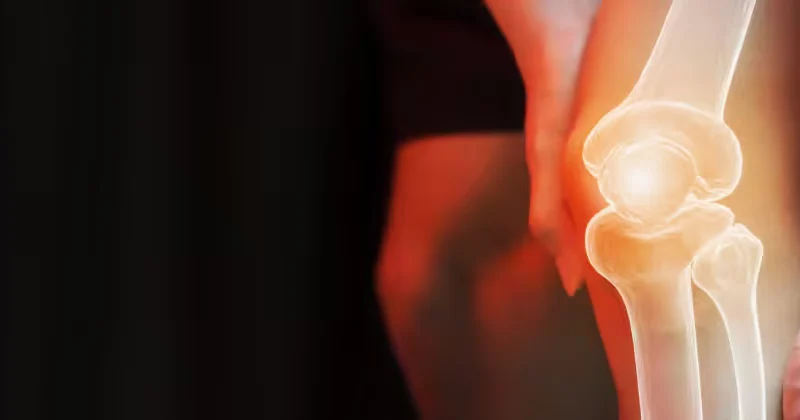
What is the anterior cruciate ligament?
The knee is stabilised by four main ligaments: the two collateral ligaments (medial and lateral) and the two cruciate ligaments (anterior and posterior), which lie in the centre of the joint and cross each other to form an “X” — hence their name.
The anterior cruciate ligament (ACL) is the one that prevents the tibia from sliding forwards in relation to the femur and controls the rotational movements of the knee. In other words, it plays a key role in the stability of the joint, particularly in movements that require sudden turns and changes of direction. When this ligament is torn, the knee loses one of its main stabilisers.
Causes and mechanism of injury
An ACL tear usually occurs through a mechanism that does not necessarily involve contact or a blow. The most common causes are:
- Sudden deceleration or change of direction (cutting/pivoting) during sporting activity
- An abrupt landing from a jump, with the knee in an unnatural position
- Hyperextension or violent twisting of the knee with the foot planted on the ground
- A direct blow to the knee (less commonly)
Sports such as football, basketball, volleyball, skiing and martial arts are associated with an increased risk. Female athletes have a statistically higher incidence of ACL tears, which is attributed to anatomical and neuromuscular factors.
Who is most affected
An ACL tear can happen to anyone; however, certain groups are at increased risk. Beyond athletes who take part in sports involving pivoting and jumping, the higher incidence in female athletes compared with men is of particular interest. This difference is attributed to a combination of factors: anatomical (different geometry of the pelvis and the knee), hormonal, and neuromuscular (different patterns of muscle activation during landing and change of direction).
Understanding these factors has led to the development of targeted prevention programmes, particularly for young female athletes, which focus on correcting risky movement patterns before they lead to injury.
Clinical presentation – Symptoms
After an ACL tear, the patient usually presents with certain characteristic symptoms:
- Immediate, severe pain at the moment of injury. Many patients describe a distinct “pop” or a feeling that “something snapped” inside the knee.
- Rapid and marked swelling (oedema) within the first few hours, due to bleeding inside the joint (haemarthrosis).
- A feeling of instability in the knee, particularly in movements that require turning or a change of direction — the knee “gives way”.
- Restricted movement and difficulty bearing weight on the leg.
In the following days, as the swelling and pain subside, the condition often seems to improve. However, the underlying instability remains and shows itself again on return to more demanding activities. This “false improvement” should not mislead you — an ACL tear does not heal on its own.
Associated injuries: the “unhappy triad”
An ACL tear rarely occurs entirely in isolation. Because of the mechanism of injury — violent twisting with the foot planted — damage to other structures of the knee often coexists. The classic combination of an ACL tear, a medial meniscus tear and an injury to the medial collateral ligament is known in orthopedics as the “unhappy triad”.
Recognising these associated injuries is decisive for planning treatment: a coexisting meniscal tear may need repair or trimming during the same operation, while collateral ligament injuries affect the rehabilitation programme. For this reason, detailed imaging with MRI, which “maps” all the structures of the knee, is essential before any treatment decision.
Diagnosis
The diagnosis of an ACL tear is based on a combination of clinical examination and imaging.
Clinical examination is essential and includes special tests that assess the stability of the knee and the mobility of the tibia in relation to the femur:
- Lachman test: the most sensitive clinical test for the anterior cruciate ligament.
- Pivot shift test: demonstrates rotational instability.
- Anterior drawer test: assesses forward displacement of the tibia.
MRI confirms the diagnosis by showing the tear of the ligament, while also revealing any associated damage to the menisci, other ligaments or the articular cartilage. The characteristic bone oedema (bone bruise) that often accompanies the tear further supports the diagnosis. The combination of the clinical findings with the imaging findings and the patient’s symptoms leads to an accurate diagnosis.
Treatment
Treatment is tailored individually to each case, taking into account the history, age, activity level and the severity of the injury (full-thickness or partial-thickness tear), as well as any associated injuries. The options are conservative treatment or surgical reconstruction.
Conservative treatment
An ACL tear does not heal on its own, as some other ligaments do. In a very small number of cases of partial tear, or in older patients with low functional demands, conservative treatment may be chosen.
Conservative treatment focuses on restoring knee function without surgery. Although the ligament does not regenerate with conservative measures, a structured physiotherapy programme can help to stabilise the joint. The programme includes strengthening of the muscles around the knee — especially the hamstrings, which can take over part of the function of the anterior cruciate ligament — as well as proprioception exercises for precise control of movement.
Surgical treatment (ACL reconstruction)
In active people and in those for whom knee stability is essential for their work or sport, surgical reconstruction is, as a rule, necessary. Its aim is to restore the stability of the joint and to protect the menisci and the cartilage from the secondary wear caused by chronic instability.
The operation — anterior cruciate ligament reconstruction — is performed arthroscopically, through small incisions, under general or spinal anaesthesia. The damaged ligament is not “stitched”, but replaced with a graft.
Which grafts are used?
In ACL reconstruction, autografts — grafts taken from the patient’s own body — are used as a rule. Autografts are free from immune reactions and incorporate faster and better at the site where they are placed. The most common options are:
- Hamstring grafts (semitendinosus and, sometimes, gracilis) — the most common choice.
- Patellar tendon graft with bone blocks from the patella and the tibia.
- Quadriceps tendon graft.
There is no single “best” graft for everyone: the choice is made individually, based on the age, physical condition, type of sport and particular needs of each patient.
Before and after surgery
Surgical reconstruction requires a short hospital stay: the patient is admitted and, as a rule, discharged the following day. Before the operation, it is important that the knee has “settled” — that the marked swelling has subsided and a satisfactory range of motion has been regained, as operating on a swollen, stiff knee increases the risk of postoperative stiffness.
As for the use of a functional brace after surgery, it has not been shown to offer substantial benefits during rehabilitation; some surgeons, however, recommend it for people at high risk of re-injury.
Rehabilitation and return to sport
Rehabilitation after ACL reconstruction is a gradual, structured process that requires patience and consistency. The physiotherapy programme progresses in phases: from the initial control of swelling and recovery of range of motion, to muscle strengthening, and then to the restoration of proprioception, balance and sporting movements.
With appropriate physiotherapy and the right programme, most patients can return to full sporting activity within 4 to 9 months after surgery. The exact time is individualised and depends on the type of sport, the progress of rehabilitation and the recovery of adequate muscle strength and control — returning too early significantly increases the risk of a new tear.
Why timely and correct treatment matters
Chronic instability from an untreated ACL tear is not merely a nuisance — it causes repeated episodes of the knee giving way, each of which can further injure the menisci and the articular cartilage. Over time, this secondary damage can lead to early knee osteoarthritis. For this reason, timely assessment by a specialist orthopedic surgeon and the right treatment decision matter beyond immediate relief.
Prevention of ACL tears
Although it is not always possible to prevent a sports injury, research has shown that special neuromuscular training programmes significantly reduce the risk of an ACL tear, particularly in athletes. These programmes focus on:
- Landing and deceleration technique: training in the correct position of the knee when landing from a jump and during sudden changes of direction, so as to avoid the dangerous “inward collapse” of the knee.
- Strengthening: targeted strengthening of the hamstrings, the gluteal muscles and the core, which stabilise the knee.
- Proprioception and balance: exercises that improve neuromuscular control of the joint.
- Plyometric training: controlled jumping exercises to train the muscles.
Incorporating such programmes into the warm-up, particularly in high-risk sports, is now established preventive practice. It is especially important for female athletes, who are at increased risk.
Cost of treating an ACL tear
The cost of treatment varies depending on the type of treatment. Conservative management mainly involves physiotherapy, while the cost of ACL reconstruction depends on the type of graft and fixation materials, the treatment of any associated injuries (e.g. of the meniscus), the hospital and the class of room, as well as the patient’s insurance cover.
In most cases, private insurance policies and insurance funds cover a significant part of the expense. Precise information is given on an individual basis, after the clinical assessment. The practice is at your disposal for any relevant information.
More on the factors that determine the cost and on cover by insurance funds: Cost of surgery.
Frequently asked questions
Does an ACL tear heal on its own?
No. Unlike some other ligaments, the anterior cruciate ligament does not heal on its own. In a very small number of cases of partial tear, or in patients with low functional demands, conservative treatment may be chosen, but the ligament itself does not “knit back together”.
Do I definitely need surgery?
Not always. The decision depends on age, activity level, the degree of instability and the associated injuries. In active people and athletes, surgical reconstruction is usually necessary to protect the knee.
How is the operation performed?
Arthroscopically, through small incisions and under general or spinal anaesthesia. The damaged ligament is replaced with an autograft from the patient’s own body (usually from the hamstrings or the patellar/quadriceps tendon).
How many days will I stay in hospital?
The hospital stay is short: the patient is admitted and, as a rule, discharged the following day.
Which graft is the best?
There is no single “best” graft for everyone. The choice is made individually, based on the patient’s age, physical condition and sporting demands.
Will I need a brace after surgery?
The use of a functional brace has not been shown to offer substantial benefits during rehabilitation. Some surgeons, however, recommend it for athletes or for people at high risk of re-injury.
When will I return to sport?
With a proper rehabilitation programme, most patients return to full sporting activity within 4 to 9 months. Returning too early significantly increases the risk of a new tear.
Is the cost covered by insurance?
In most cases, private insurance policies and insurance funds cover part or all of the expense. The practice can give you detailed information.
Can the tear happen again after surgery?
Yes, there is a risk of a new tear — either of the graft or of the anterior cruciate ligament of the other knee. The risk increases significantly with a hasty return to sport, before rehabilitation is complete. Adherence to the programme and the criteria for a safe return are decisive.
Are female athletes more prone to it?
Yes. Female athletes have a statistically higher incidence of ACL tears, for anatomical, hormonal and neuromuscular reasons. This is why prevention programmes are of particular value in this population.
Contact
Book an appointment with Dr. Tsarouhas
Fill in the form with the time that suits you and we will contact you, or call us directly.
Call us 210 6464 744-
Petroupoli 1 Agias Triados St., 132 31 210 5011 717
-
Heraklion, Crete 49 Kyrillou Loukareos St., 712 01
Appointment request
We reply to every request on the same or the next working day.
Your details are used solely to contact you.