
Orthopedic condition
Knee Osteoarthritis
Knee osteoarthritis is one of the most common causes of chronic pain and stiffness, particularly in older people. It is a degenerative disease that progressively affects the articular cartilage of the knee, causing pain, swelling and reduced mobility, and it is associated with age, previous injuries and genetic predisposition. Without treatment, the condition tends to worsen, seriously affecting quality of life and everyday activities.
Dr. Ioannis Tsarouhas, Orthopedic Surgeon specialising in osteoarthritis of the knee and hip, treats the condition across the full spectrum of its stages — from conservative management to modern minimally invasive surgical techniques — with the aim of relieving pain and restoring movement.
Definition
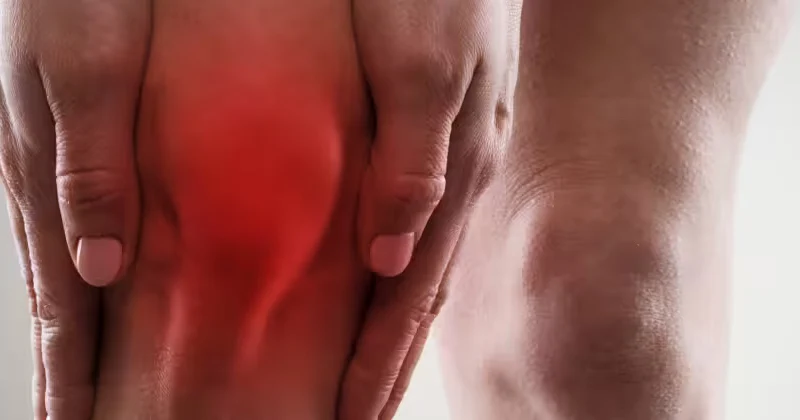
Osteoarthritis is a chronic condition of the knee joint in which there is progressive softening and wear of the articular cartilage — that is, loss of its normal firmness and elasticity. This wear is accompanied by the formation of new bone and cartilage at the margins of the knee (the so-called osteophytes) and by contracture of the joint capsule, which restricts movement.
Articular cartilage is a smooth, resilient tissue that covers the surfaces of the bones in the joint, allowing them to glide smoothly and painlessly and absorbing shock during movement. When this cartilage wears away, the bones gradually begin to rub against each other, which causes pain, inflammation and stiffness.
In general, knee osteoarthritis is regarded as a condition of old age; however, younger patients can also develop it if the articular cartilage has been injured or is subjected to abnormal loading over a long period. It is more common in women after the menopause, as well as in overweight patients, in whom the increased load places a chronic strain on the joint.
Causes and risk factors
Many factors contribute to the development of knee osteoarthritis, and they often act in combination:
- Age: Over the years, cartilage wears naturally and loses its resilience.
- Genetic predisposition: Family history plays an important role in the likelihood of developing the disease.
- Increased body weight: Every extra kilogram is multiplied into load on the knee joint during walking.
- Previous injuries: Fractures, meniscal tears or ligament tears can, in the long term, lead to wear of the joint (post-traumatic osteoarthritis).
- Abnormal loading and malalignment: Valgus or varus deformity of the knee leads to uneven distribution of load and early wear.
- Metabolic and hormonal effects on the cartilage, as well as pre-existing inflammatory arthritis.
- Heavy strain, occupational or sporting, that repeatedly overloads the knee.
Clinical presentation
The symptoms of knee osteoarthritis usually set in gradually and worsen over time.
Pain is the main symptom. In the early stages, pain appears with activity and subsides with rest. Gradually, however, the relief is no longer complete and the pain becomes more persistent. Over time, night pain also appears, and the patient struggles to find a position that brings relief, which also affects the quality of sleep.
Stiffness is a common clinical sign, particularly in the morning or after a period of inactivity, and it gradually worsens as the disease progresses.
Swelling of the joint (effusion, synovitis) is common and is due to the inflammation that accompanies the wear.
Deformity and malalignment of the joint are also very common in advanced stages and are accompanied by instability of the knee and wasting of the quadriceps muscle. The result is a progressive impairment of knee function, which shows itself as lameness (a limp), difficulty using stairs, a reduced walking distance and a gradual inability to carry out everyday activities.
Stages of osteoarthritis
Knee osteoarthritis is a progressive condition whose course is usually described in stages:
- Early stage: Mild cartilage wear, with intermittent pain mainly after activity. X-rays may show slight narrowing of the joint space.
- Intermediate stage: More evident wear, with more frequent pain, stiffness and occasional swelling. Osteophytes appear and the narrowing becomes clearer.
- Advanced / end stage: Extensive or almost complete loss of cartilage, with “bone-on-bone” contact, severe pain even at rest, significant stiffness, swelling and deformity of the limb. At this stage, knee replacement is usually the appropriate solution.
This staging helps the doctor and the patient to understand the course of the disease and to choose the appropriate treatment strategy for each phase.
Diagnostic methods
The diagnosis of knee osteoarthritis is based on clinical examination and imaging.
Plain X-rays of the knee, particularly weight-bearing views (taken standing), are so characteristic that they often make more specialised investigations unnecessary. The typical radiographic findings of osteoarthritis include asymmetric narrowing of the joint space, sclerosis of the subchondral bone, osteophytes at the joint margins, as well as findings of previous conditions (fractures, chondrocalcinosis, etc.).
CT and MRI scans are more specialised investigations that can help to assess the extent of the damage and the condition of the cartilage, the menisci and the ligaments, particularly when associated lesions are suspected or in the early stages.
Treatment
The treatment of knee osteoarthritis is individualised and depends on the stage of the disease, the severity of the symptoms, and the patient’s age and activity level. It follows a stepwise approach, from conservative measures to surgical treatment.
Early stage
In the early stage, the treatment of incipient osteoarthritis rests on three basic measures:
- Pain relief: Analgesics and non-steroidal anti-inflammatory drugs to control pain and inflammation.
- Mobilisation: Physiotherapy and exercise therapy, with the aim of maintaining range of motion and strengthening the muscles that support the knee.
- Load reduction: Weight loss, use of a walking stick where needed, avoidance of unnecessary strain and periods of complete rest.
Intermediate stage
In the intermediate stage, if the symptoms worsen, the treatment options widen. Local injections into the joint can be given, with biological agents (PRP – platelet-rich plasma, stem cells) or hyaluronic acid, with the aim of relieving the symptoms. In selected cases with malalignment but with a stable joint and good mobility, osteotomies to correct the weight-bearing axis of the knee may be indicated; these redistribute the load and protect the healthy part of the joint.
End stage
In the end stage, advanced bone destruction with increased pain, instability and deformity requires reconstructive surgery, namely total knee replacement, a thoroughly established operation with excellent results. In selected cases, where the wear is confined to a single compartment of the knee, partial (unicompartmental) knee replacement may be indicated, a more limited operation that preserves the healthy parts of the joint.
Before and after surgery
Before any surgical decision, the patient undergoes a full clinical and imaging assessment, as well as preoperative laboratory, cardiological and anaesthetic evaluation. At the same time, any coexisting conditions are brought under control, so that the patient comes to surgery in the best possible condition.
After knee replacement, mobilisation begins early, with the help of a physiotherapist. The rehabilitation programme includes progressive walking, range-of-motion exercises and muscle strengthening. The great majority of patients report substantial relief from the chronic pain of arthritis and a significant improvement in function and quality of life.
How it affects everyday life
Knee osteoarthritis is not simply a “nuisance” — in advanced stages it profoundly affects the patient’s quality of life and independence. Activities that are taken for granted gradually become difficult or painful:
- Walking, especially over distances or uphill
- Going up and down stairs
- Getting up from a low chair or sofa
- Kneeling and deep squatting
- Sleep, when the pain also appears at night
It is this progressive limitation — even more than the pain itself — that drives most patients to seek a solution. Timely treatment can break this vicious circle: pain leads to reduced movement, immobility to muscle weakness, and weakness to even greater strain on the joint.
The role of physiotherapy
Physiotherapy is one of the cornerstones of the conservative treatment of osteoarthritis, and also of rehabilitation after any surgical procedure. A well-designed programme focuses on strengthening the quadriceps and the hamstrings, which stabilise and offload the knee, on maintaining and improving range of motion, and on improving balance.
Regular, guided exercise not only relieves the symptoms but can also slow the progression of the disease and postpone the need for surgery. It is important that the exercises are individualised and performed with the correct technique, which is why working with a specialised physiotherapist, under the guidance of the orthopedic surgeon, is of real value.
Prevention
From the above it is clear that many factors are involved in the pathogenesis of knee osteoarthritis: genetic predisposition, metabolic and hormonal effects on the cartilage, the degree of strain on the knee, local mechanical loading, pre-existing arthritis and traumatic injuries of the cartilage, which result in the loss of its elasticity and a reduced ability to withstand load.
Osteoarthritis can, to some extent, be prevented or its progression slowed by modifying some of these factors:
- Weight reduction, which significantly offloads the joint
- Regular, gentle exercise and physiotherapy
- Low-impact activities, such as swimming and cycling
- Muscle strengthening, especially of the quadriceps, which stabilises the knee
- Avoiding high-impact activities that strain the joint
- Prompt and correct treatment of any knee injury
When to see an orthopedic surgeon
Knee osteoarthritis is easier to manage the earlier it is diagnosed. It is advisable to seek a specialist orthopedic assessment if you notice:
- Knee pain that persists for more than a few weeks or gradually worsens
- Morning stiffness or difficulty with the “first steps” after rest
- Recurrent or persistent swelling
- Difficulty using stairs, walking or getting up from a chair
- A grating sensation or “locking” of the joint
- Any incipient deformity of the limb
Early diagnosis allows appropriate treatment to begin at a stage when conservative methods are most effective, delaying or even preventing the need for surgery.
Cost of treatment
The cost of treating knee osteoarthritis varies considerably depending on the stage and the type of treatment. Conservative management carries a different financial burden from surgical treatment, and among the operations too (osteotomy, partial or total knee replacement) the cost varies according to the type and materials of the implants, the hospital and the class of room, as well as the patient’s insurance cover.
In most cases of surgical treatment, private insurance policies and insurance funds cover a significant part of the expense. Precise information about the cost is always given on an individual basis, after the clinical assessment and once the treatment plan has been defined.
More on the factors that determine the cost and on cover by insurance funds: Cost of surgery.
Frequently asked questions
Can knee osteoarthritis be cured?
Osteoarthritis cannot be “cured” in the sense of fully reversing the wear, as cartilage does not regenerate. However, the symptoms can be controlled effectively, and in advanced stages knee replacement restores pain-free function of the joint.
At what age does it appear?
It is more common in old age, but it can also appear in younger people, especially when the cartilage has been injured or is subjected to abnormal loading. It is more common in women after the menopause and in overweight patients.
Do I definitely need surgery?
No. In the early and middle stages, conservative treatment (medication, physiotherapy, weight loss, injections) often provides satisfactory control of the symptoms. Surgical treatment is recommended when the conservative options have been exhausted and the pain seriously impairs quality of life.
Do injections (PRP, hyaluronic acid) help?
In selected cases, particularly in the intermediate stage, local injections with biological agents or hyaluronic acid can relieve the symptoms. Their suitability is assessed individually by the doctor.
How much does weight loss help?
Considerably. Every extra kilogram of body weight translates into a multiple of that load on the knee during walking. Weight loss reduces pain and slows the progression of the wear.
Does exercise help arthritis or make it worse?
Appropriate low-impact exercise (swimming, cycling, walking) and quadriceps strengthening help to relieve the symptoms and maintain function. In contrast, high-impact activities may strain the joint.
What is an osteotomy and when is it indicated?
An osteotomy is an operation that corrects the weight-bearing axis of the knee, redistributing the load and protecting the healthy part of the joint. It is indicated in selected patients with malalignment but with a stable joint and good mobility.
When should I see an orthopedic surgeon?
If you have pain, stiffness, swelling or restricted movement in the knee that persists or worsens, it is advisable to be assessed by a specialist orthopedic surgeon. Early diagnosis widens the available treatment options.
Is the cost covered by insurance?
In most cases of surgical treatment, private insurance policies and insurance funds cover part or all of the expense. The practice is at your disposal for detailed information.
Do I need to change my lifestyle?
Certain adjustments — such as maintaining a healthy weight, regular low-impact exercise and avoiding activities that strain the knee — help considerably in managing the symptoms and slowing the progression of the disease.
Does osteoarthritis come back after knee replacement?
Knee replacement replaces the worn joint surfaces, so osteoarthritis does not “come back” in the artificial joint. The prosthesis is subject to normal wear over time, which is why regular follow-up and avoiding high-impact activities are recommended.
Contact
Book an appointment with Dr. Tsarouhas
Fill in the form with the time that suits you and we will contact you, or call us directly.
Call us 210 6464 744-
Petroupoli 1 Agias Triados St., 132 31 210 5011 717
-
Heraklion, Crete 49 Kyrillou Loukareos St., 712 01
Appointment request
We reply to every request on the same or the next working day.
Your details are used solely to contact you.