
Surgical technique
Core Decompression of the Femoral Head
Core decompression of the femoral head (hip drilling) is a minimally invasive, joint-sparing surgical technique, used mainly in the early stages of avascular necrosis of the femoral head. Its aim is to relieve pain, decompress the necrotic area and stimulate the restoration of blood supply, preventing — where feasible — progression to collapse of the femoral head and to arthroplasty.
Dr. Ioannis Tsarouhas, Orthopedic Surgeon with particular expertise in hip conditions, performs core decompression in appropriately selected patients, with the aim of saving the native joint.
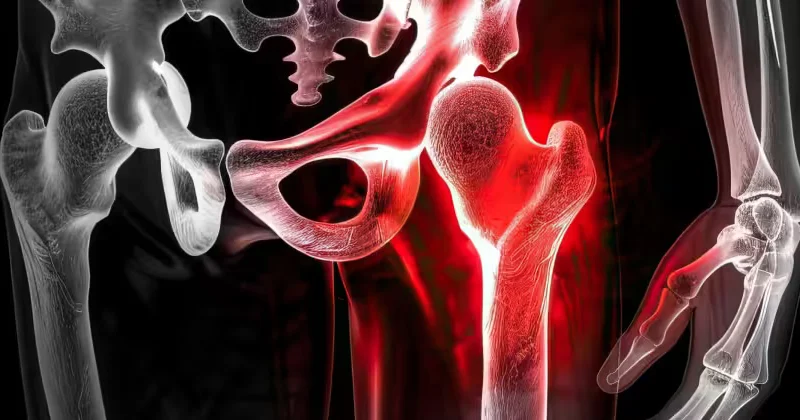
What is core decompression of the hip?
Core decompression is a technique in which the surgeon creates one or more thin channels (drill holes) through the femoral neck towards the necrotic area of the femoral head. The procedure serves two main purposes:
- Decompression: In avascular necrosis, the pressure inside the bone increases, which causes pain and worsens the disturbance of the blood supply. Drilling “releases” this pressure, relieving the pain.
- Stimulation of healing: The channels created act as “conduits” through which new blood vessels can grow and the bone healing process can begin.
In other words, it is a procedure that does not replace the joint, but attempts to save it, giving the bone the chance to recover.
When is core decompression indicated?
Core decompression is a technique with specific indications. The ideal candidate is a patient with early-stage avascular necrosis of the femoral head — that is, before the spherical surface of the head collapses and before arthritis develops.
This selection is critical: once the femoral head has collapsed, core decompression no longer offers any benefit, as the damage has become irreversible — and the appropriate solution is then arthroplasty. For this reason, core decompression is closely linked to the early diagnosis of avascular necrosis, which makes MRI (which detects the disease very early) particularly valuable.
In certain cases, core decompression can be combined with other techniques that enhance healing, such as the placement of bone graft or biological agents.
The close relationship with avascular necrosis
Core decompression cannot be understood independently of avascular necrosis of the femoral head, the condition it is called upon to treat. Avascular necrosis is characterised by the interruption of the blood supply to part of the femoral head and the gradual death of the bone. The natural course of the disease, if left untreated, often leads to collapse of the femoral head and severe arthritis.
Core decompression intervenes precisely in this course, in the early stages: it attempts to halt the progression before it reaches the point of irreversible collapse. This close relationship explains why the success of core decompression depends so heavily on the early diagnosis of avascular necrosis — and why MRI, which detects the disease at its earliest stages, is the key.
Why correct patient selection is decisive
Core decompression is a valuable technique, but not for every patient with avascular necrosis. Its success depends on careful selection: ideally, the patient should be at an early stage, with a small to moderate extent of necrosis and without collapse of the femoral head.
In patients with extensive necrosis or an advanced stage, core decompression will not offer lasting benefit, and efforts should be directed towards arthroplasty. The role of the specialised surgeon is precisely to recognise which patient will truly benefit from core decompression, so that the opportunity to save the joint is taken where it genuinely exists.
How the operation is performed
Core decompression is performed under general or spinal anaesthesia and is a minimally invasive procedure. Through a small incision on the lateral aspect of the thigh and under image intensification (for precision), the surgeon introduces a thin drill or special instrument, which is directed through the femoral neck towards the necrotic area of the head, creating the decompression channel (or channels).
The operation is short and the soft tissue trauma minimal. In most cases, the patient needs only a short hospital stay.
Postoperative course and rehabilitation
After core decompression, one of the most important elements of rehabilitation is protected weight-bearing on the limb: the patient uses walking aids (crutches) for a period of weeks, in order to protect the weakened femoral head and give the bone time to recover, without the risk of collapse under full weight.
The exact duration and the degree of weight-bearing allowed are determined by the surgeon. In parallel, a physiotherapy programme is followed to maintain range of motion and muscle strength. Progress is monitored with regular imaging, in order to assess the response of the disease.
Effectiveness and expectations
The effectiveness of core decompression depends to a large extent on the stage at which it is performed and on the extent of the necrosis. In the early stages and in smaller lesions, the results are better, with a significant proportion of patients experiencing pain relief and avoiding or significantly delaying the need for arthroplasty.
It is, however, important for expectations to be realistic: core decompression does not always guarantee full recovery, and in some cases the disease may progress despite the operation, ultimately making arthroplasty necessary. Although it is not a panacea, core decompression offers a valuable opportunity to save the native joint, especially in younger patients — and this is why early diagnosis and correct patient selection are so important.
Cost of treatment
The cost of core decompression depends on the technique, the possible use of grafts or biological agents, the hospital and the length of stay, as well as insurance cover. In most cases, private insurance policies and insurance funds cover a significant part of the expense.
Precise information is given on an individual basis, after the clinical assessment. The practice is at your disposal for any relevant information.
More on the factors that determine the cost and on cover by insurance funds: Cost of surgery.
Advantages of the minimally invasive approach
One of the key features of core decompression is its minimally invasive nature. Unlike an open operation, core decompression is performed through a small incision, with minimal soft tissue trauma. This translates into a series of advantages for the patient:
- Little postoperative pain
- Short hospital stay
- Rapid wound healing
- Low complication rate
The fact that this is a “gentle” operation, combined with the possibility of saving the native joint, makes core decompression an attractive option for appropriately selected patients — especially younger ones, for whom postponing an arthroplasty is of particular value.
Core decompression as part of overall management
Core decompression is not an isolated act, but part of an overall strategy for managing avascular necrosis. Alongside the operation, emphasis is placed on addressing the underlying risk factors — where these exist — as well as on protected weight-bearing and follow-up.
In patients with bilateral avascular necrosis, the strategy is tailored to each hip separately, according to the stage of each. It is this comprehensive approach — combining the local procedure with management of the causes and close follow-up — that maximises the chances of saving the native joint.
Frequently asked questions
What is core decompression of the hip?
It is a minimally invasive, joint-sparing technique in which channels are created into the necrotic area of the femoral head, in order to decompress it, relieve pain and stimulate the restoration of blood supply.
When is it indicated?
Mainly in the early stages of avascular necrosis of the femoral head, before the head collapses and before arthritis develops. Early diagnosis is decisive here.
Will I avoid arthroplasty with core decompression?
In appropriately selected, early cases, core decompression can prevent or significantly delay the need for arthroplasty. It does not, however, guarantee this in every case, as the disease can sometimes progress despite the operation.
How long does rehabilitation take?
The key element is protected weight-bearing with crutches for a period of weeks, in order to protect the femoral head. Progress is monitored with regular imaging.
Is it a painful operation?
It is a minimally invasive procedure with a small incision and minimal soft tissue trauma. Postoperative pain is, as a rule, mild and is controlled with analgesics.
Is the cost covered by insurance?
In most cases, private insurance policies and insurance funds cover part or all of the expense. The practice can inform you in detail.
Might arthroplasty be needed later despite core decompression?
Yes. Core decompression does not always guarantee reversal of the disease. In some cases avascular necrosis progresses despite the operation, and arthroplasty is eventually needed. Even then, however, core decompression may have “bought” valuable time.
Contact
Book an appointment with Dr. Tsarouhas
Fill in the form with the time that suits you and we will contact you, or call us directly.
Call us 210 6464 744-
Petroupoli 1 Agias Triados St., 132 31 210 5011 717
-
Heraklion, Crete 49 Kyrillou Loukareos St., 712 01
Appointment request
We reply to every request on the same or the next working day.
Your details are used solely to contact you.